Posted on 17 Sep 2026
In July 2025, eight people received a combined sentence of nearly 80 years in prison following investigations into cannabis farms across the UK, where Vietnamese migrants were exploited to run cultivation sites. During the trial, one victim said that he had no choice but to grow cannabis because he was in debt bondage to those who had brought him to the UK.
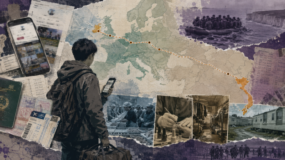
Prosecutors explained that victims were forced to cultivate cannabis to repay debts and travel costs, while facing degrading conditions and threats against themselves and their families. The case demonstrates that Vietnamese people smuggling to Europe is part of an ecosystem in which migration is financed through debt, which is then repaid through exploitative labour.
At the core of this smuggling-to-exploitation ecosystem are moi gioi (or môi giới): a Vietnamese term that translates to broker but is widely used to describe intermediaries who connect aspiring Vietnamese migrants to documents, transport, employers and, in some cases, smugglers and traffickers. They achieve this through networks of recruiters, informal lenders, document suppliers, transport providers, exploitative employers, remittance channels and other smuggling groups operating throughout Europe.
The recruitment of migrants is concentrated in poorer territories and cities in Vietnam with long histories of international labour migration in north and central Vietnam, especially Nghe An, Ha Tinh, Quang Binh, Hai Phong and Ha Noi. Brokers use relatives, friends, diaspora members and social media platforms like Facebook and TikTok to present journeys as organized and commercially structured. Families may borrow money, mortgage assets, or rely on high-interest lenders and loan sharks to pay for the journey, which is often sold as a package, thereby becoming bound by debt. Furthermore, the exact costs of the service provided are not always clear at the start.
Smuggling to Europe typically begins with moi gioi arranging visas, contracts, study abroad paperwork, or travel documents that permit entry through airports and official border checkpoints. This cover of legal entry is the starting point of the journey: while the documents may be genuine on paper, they are often used to hide a different intended destination. Hungary is clearly the preferred initial entry point for Vietnamese migrants, but other central European countries are also often used. Netherlands and Belgium are typically transit countries, whereas France and Germany can serve variously as entry points, transit zones or final destinations.
The control of Vietnamese migrants through debt is built gradually: created before departure, deepened during movement through Europe, and later repaid through labour exploitation, forced criminality and sexual exploitation. Vietnamese migrants appear as workers in nail salons, restaurants, takeaways, food-processing factories, hospitality, light manufacturing and other low-wage sectors. Forced criminality is less visible but also noteworthy, especially in the UK, where cannabis cultivation can expose Vietnamese migrants to both coerced labour and criminalization. Sexual exploitation and abuse appear even less frequently, but law enforcement cases from Germany and Czech Republic show that Vietnamese women are affected and that the problem is likely under-identified. Similarly, Vietnamese women sometimes fall prey to strict surveillance and sexual abuse by smugglers in northern France, who isolate them and continuously monitor their movements.
For authorities, the system is difficult to disrupt because brokers can shift routes, change documents, adjust prices, introduce new intermediaries or redirect migrants to different labour markets. Policy responses should therefore focus on disrupting the organized crime elements embedded in this ecosystem, rather than migration itself. This means targeting the financial model, document fraud, abuse of visa channels, and the link between brokers and employers. Expanding regulated labour pathways remains important, but without addressing the moi gioi business model, these pathways risk being absorbed into the same exploitative system.
Key points
- The moi gioi smuggling-to-exploitation ecosystem turns migrant aspirations into controlled, debt-based manipulation that links recruitment, work placement, migration and organized crime.
- Migrants accrue debt even before they leave Vietnam, due to the cost of documents and the price of the journey. Victims are targeted through trust-based recruitment and social media advertising.
- Smuggling typically starts with legal entry into Europe by air, which acts as a cover for irregular onward movement using land transfers and through extra payments.
- The Channel crossing uses specialized, and non-Vietnamese, smuggling networks to evade official border checkpoints and patrol surveillance.
- Forced labour, criminal and sexual exploitation are not separate from the smuggling process, but part of the same ecosystem through which debt is repaid and control is maintained.
- Policy responses should target the organized crime business model behind moi gioi services, not migration itself.