Posted on 20 May 2026
Pham’s* journey from Vietnam to Europe began in debt. After selling her business and borrowing thousands from loan sharks, she contacted a môi giới, or broker, to take care of the logistics. For the formidable sum of US$14 000, this illicit facilitator secured her a Czech visa, allowing entry into the Schengen Area, and organized her onward travel through Germany and France.
The môi giới arranged everything. On the coast of the English Channel, Pham was picked up and taken to a migrant camp, divided by nationality. Her boat crossing – £4 000, payable on arrival – was provided by a Kurdish smuggler. After reaching the UK, however, Pham struggled to settle. She moved between acquaintances while searching for a job, then fled her workplace during a police check, afraid of being deported. Friends advised her to travel to Ireland. For €2 000, another môi giới supplied a lookalike passport, organized a flight to Belfast, and delivered her to a job at a nail salon in Dublin.
Pham’s story has historical echoes. In the late 1970s, in the aftermath of the Vietnam War, Ireland received a group of Vietnamese refugees – often referred to as ‘boat people’ – who were resettled with state support. Many still live in the country today. Today’s irregular movement, however, is privately financed, and facilitated by illicit networks rather than humanitarian programmes.
A less crowded shore
Ireland has become an increasingly popular destination for Vietnamese migrants in recent years. Asylum claims have risen sharply, from just 12 recorded cases in 2020 to around 520 by early October 2025. Fieldwork conducted in Ireland indicates that many Vietnamese people who had initially intended to settle in the UK or Germany are now entering the country’s asylum system.
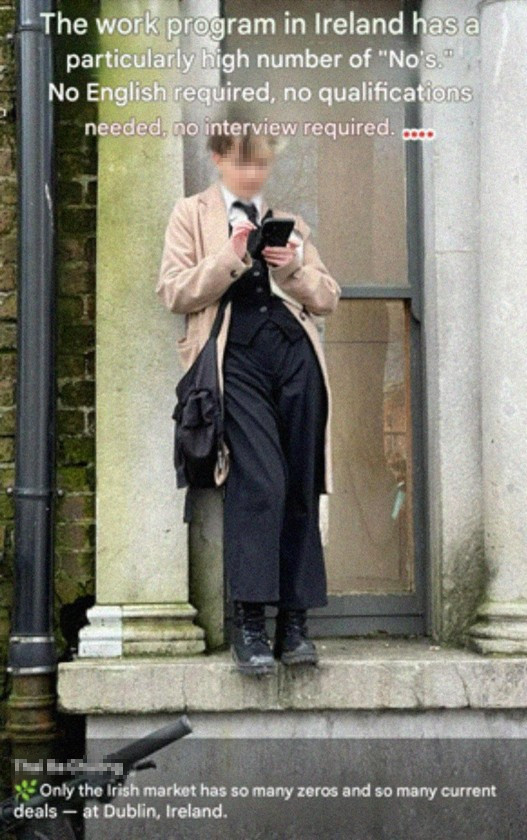
Within the migrant community, Ireland is reportedly seen as a less saturated destination than the UK, which is considered competitive and unpredictable, or Germany, which is increasingly perceived as bureaucratic and hard to access. The Vietnamese diaspora in Ireland, which has grown from a few hundred people in 1979 to an estimated 6 000 today, provides the infrastructure that supports daily life and facilitates employment. Newcomers can access shared accommodation and community support, often through informal networks clustered around businesses, Buddhist temples and local contacts, and are introduced to work opportunities, such as in nail salons, hospitality and food processing, where demand is steady and entry barriers are low.
In many respects, this system is remarkably effective. It reduces the usual difficulties encountered by irregular migrants, such as housing challenges and social isolation, and facilitates rapid economic participation. If accessed through regulated and transparent channels, these mechanisms could support a functional integration pathway for Vietnamese workers. In practice, however, môi giới ensure the continued operation of a profitable shadow economy.
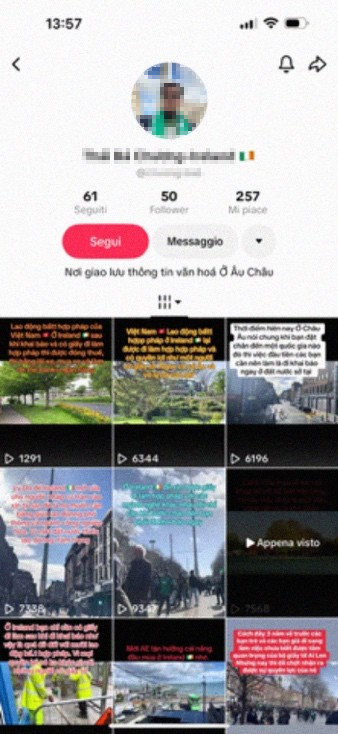
Môi giới work fast, and can arrange travel within a matter of days. But their services come at a cost that extends beyond financial terms. They charge steep fees for visas, transport and job access, burdening their clients with debt from the outset. Migrants often find themselves owing between US$10 000 and US$30 000, and payment is non-negotiable; defaulting can result in intimidation, threats, or financial pressure placed on family members in Vietnam. The work on offer, meanwhile, is often poorly paid and exploitative, trapping people in a cycle of economic hardship and dependency.
Migrants are also often deceived by brokers about what they are signing up for. Huy*, aged 33, has been in Ireland for four years. When he embarked on his journey, he believed it would be straightforward and above board. In northern Vietnam, he paid around US$20 000 to a môi giới for a work visa and a promised job at a food-processing factory in Monaghan. The package was presented as formal employment, with accommodation included. The reality, however, was far more grim: overcrowded caravans, overnight shifts of up to 17 hours and poverty wages. His passport was confiscated by his employer, restricting his ability to leave. After several months he managed to get out and moved to Drogheda, where he reconnected with the Vietnamese community and found work in a nail salon – one that finally gave him a livelihood and some stability.
An illicit service economy
Pham and Huy’s stories show that behind Vietnamese migration to Europe lies a structured, profit-driven criminal system, operating across borders. What appears to be individual movement is in fact coordinated at every stage, from recruitment in Vietnam to handovers at transit hubs in the Czech Republic, Poland, France or Spain, to final placement in employment that, for some, amounts to forced labour. For migrants, the debt incurred creates a perennial financial obligation that shapes their decisions and makes it difficult to exit the system.
Môi giới are at the centre of this model. They are not merely smugglers, but highly skilled coordinators within a transnational illicit service economy. They arrange documents, including false passports, organize transport and accommodation, and increasingly control access to employment. In some cases, they are also the employer, binding migration, debt and labour into a single arrangement. Their control may not be overtly coercive, but the migrants’ dependence on them is maintained through financial pressure, withheld documents, access to housing and restricted opportunities for alternative work.
These networks are also highly adaptive. Routes and destinations shift quickly in response to changing enforcement environments and perceived opportunities, lower competition and fewer barriers to entry. Social media platforms are used to advertise new packages and services in real time.
Rather than focusing on migration itself, policy responses must be directed at the organized criminal elements behind this system. This should include going after the financial model – including staged payments and cross-border money flows – as well as document fraud and the abuse of legal visa channels. At the same time, enforcement efforts should prioritize the connection between labour and brokerage, particularly where employers are directly linked to recruitment networks. While expanding regulated labour pathways may help mitigate risks, the challenge lies in dismantling the business model that turns mobility into a controlled and monetized supply chain.
One of the longstanding challenges in addressing Vietnamese migrant smuggling has been the closed and insular nature of its networks, which has hindered external intervention. However, recent research suggests that these operations are increasingly intersecting with other migration corridors. In northern France, for instance, they overlap with Kurdish and multinational facilitation networks. This convergence may create opportunities for more targeted disruption strategies. Further research is needed to fully understand these dynamics, and forthcoming GI-TOC analysis will represent an important step towards building a stronger evidence base.
*Names have been changed throughout.