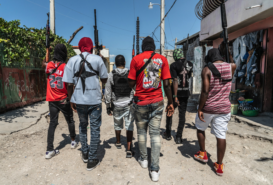
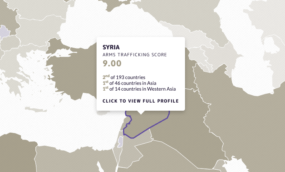
If the objective of the US intervention in Venezuela was to reduce the threat posed by organized crime, major challenges still lie ahead. While Operation Absolute Resolve may have successfully removed President Nicolás Maduro from power, the risks of violent destabilization in a country marked by entrenched corruption, the politicization of state security forces and numerous criminal and armed actors are very high. As evidenced by failures of the ‘kingpin strategy’ elsewhere in the Americas, toppling the Venezuelan president through methods widely deemed as illegal may create opportunities for criminal armed groups to scramble for control of the country’s illicit markets. This would generate further instability and violence in the region, fuelling the kinds of repressive agendas increasingly seen across Latin America.
State-embedded criminal actors
President Donald Trump and Secretary of State Marco Rubio publicly framed the 3 January operation as a law-enforcement action aimed at arresting Maduro on drug-trafficking and weapons-related charges, rather than as a declaration of war or a regime change exercise. Indeed, upon his arrival in the US, Maduro was first taken to the headquarters of the Drug Enforcement Administration. At his arraignment in a New York court on 5 January, he and his wife pleaded not guilty to federal drug trafficking charges and attempted to challenge being brought to the US against their will. Maduro’s second hearing is scheduled for 17 March, but, as with other high-profile cases of Latin American criminals prosecuted in the US, superseding indictments may well emerge in the next months, potentially introducing new charges or defendants.
The justification for the operation used by the Trump administration is that Venezuela is a hub for drug trafficking, which poses a threat to the health and security of American citizens, and that Maduro is implicated in this. This, however, is contested by some who argue that Washington’s framing of the Cartel de los Soles (Cartel of the Suns) as a cohesive criminal organization composed of Venezuela’s top brass, with Maduro at its apex, is unsubstantiated. Indeed, the US Department of Justice has already nuanced its claim.
That said, there are strong indications that segments of the Venezuelan state apparatus are deeply engaged in criminal activities. This is consistent with the findings of the latest edition of the Global Organized Crime Index, which ranks Venezuela among the top 10 per cent of countries in the world in terms of the influence of state-embedded criminal actors.
What happens next in Venezuela is unclear, despite Trump’s assertion that the US will ‘run Venezuela until there is a safe, proper, and judicious transition’. If the US wants to root out the state-embedded actors who have protected and benefited from illicit economies under the Maduro regime, it will not only have to indict the ousted president, but work towards restoring the rule of law.
After more than two decades of governance under the Chavista regime, the country’s political-criminal ecosystem is deeply entrenched in state structures. Cooperation between the state and criminal actors is choreographed around protection arrangements, trafficking corridors and money-laundering circuits. Any changes to this system are therefore likely to disrupt these networks. If the dynamics around the state-embedded actors who control the criminal economies are modified, but global demand for cocaine and gold prices remain high, we should expect violent mafia groups to fill the void.
And there is likely to be huge resistance from those – not least among the security forces and the ruling party – who might have a lot to lose, including key Chavistas figures who remain in power, such as interior relations minister Diosdado Cabello, also accused in the Maduro indictment. Maduro was able to negotiate among the various factions in Venezuela’s ruling party, the Partido Socialista Unido de Venezuela (PSUV), enabling a fragile yet operational equilibrium. The appointment of a new president could disrupt this delicate arrangement, which includes criminal and rebel organizations, with consequences for criminal economies and the alliances that control them.
The hazards ahead
In this moment of heightened uncertainty, and without a clear path to transition, certain political, economic or armed actors may seek to assert their position in Venezuela’s criminal markets. This scenario would not be limited to domestic stakeholders. Foreign criminal and armed groups, particularly from Colombia and Brazil, may well also attempt to exploit the situation and secure access to trafficking routes, logistical infrastructure or protection mechanisms.
One such threat is the Ejército de Liberación Nacional (ELN), an armed group that operates in Colombia and Venezuela, and is involved in cross-border cocaine trafficking, illegal gold mining and extortion. Others include FARC dissident groups operating in the Colombia and Venezuela border region, and the Tren de Aragua, another Venezuelan criminal group, which operates transnationally across South America.
The crisis in Venezuela may also present an opportunity for drug-trafficking groups to take advantage of the illicit gold trade. With the dramatic rise in international gold prices over the past five years, drug cartels have moved into controlling illicit gold mining sites across the Amazon Basin, including in the Orinoco mining arc in Venezuela. Brazil’s Primeiro Comando da Capital has already developed close links with the Tren de Aragua in the Brazil–Venezuela border region of Roraima, particularly for weapon trafficking and to establish control over illicit gold mining sites on the Brazilian side of the border. The prospect of expanding into Venezuela may prove tempting to the Brazilian group in the current context. Meanwhile, another Brazilian criminal organization, the Comando Vermelho, has become an ascendant force in cocaine trafficking throughout the Amazon. This group may also take advantage of the current crisis to expand its footprint into the Venezuelan Amazon region.
Besides criminal competition over cocaine and gold, there is also the risk of long-term confrontation with the Bolivarian Militias, a force of civilian volunteers created by former president Hugo Chávez to defend the Chavista revolution. The ELN has said that it is willing to support Maduro’s regime along with members of the military loyal to figures in power. This could pose a serious threat to security, with criminal proceeds funding their fight. The risk is compounded by the availability of weapons. Venezuela is a source and transit country for firearms in the region, and this activity is likely to intensify if effective control mechanisms are not put in place.
Particular attention should also be paid to the risks associated with illicit firearm trafficking from Venezuelan stockpiles. Estimates suggest that civilian firearm ownership alone accounts for between 1.6 and 4.1 million weapons. In addition, there are hundreds of thousands of military-grade weapons held within the stockpiles of the armed forces, pro-government militias and guerrilla groups.
Although Venezuelan actors play a role in cocaine trafficking, the primary destination is Europe, and not the US. What is more, cocaine trafficking in the Caribbean relies on a wide range of transport methods, including containerized shipping, fishing vessels, bulk carriers, semi-submersibles, go-fast boats and recreational vessels, all of which are complemented by land and air routes. Cocaine trafficking through Venezuela is therefore likely to face only some disruption by Operation Absolute Resolve. Given the US’s heightened scrutiny of Colombia’s Caribbean and Pacific corridors, new trafficking routes may open up through Ecuador, and especially Peru, where rising cocaine production levels and institutional fragility may increase the country’s strategic relevance within regional trafficking networks.
Any escalation of violence in Venezuela and instability along the Colombia–Venezuela border may well also trigger renewed flows of refugees and migrants. These dynamics may be exploited by organized criminal groups that operate human smuggling and trafficking networks through Colombia and routinely extort migrants. It is worth noting that the Colombian military has already been deployed to the border to mitigate where possible.
More broadly, the intervention in Venezuela raises questions about how Washington will approach other drug-producing countries, such as Colombia, which will hold an election in May, and with whom tensions between President Trump and President Petro are escalating, as well as Ecuador, Peru and Bolivia, and how it might pursue ‘narco-terrorists’ – to use the US administration’s terminology – in Mexico.
Amid fears of further US interventions in the region, the Americas may witness a renewed wave of hardline, security-driven responses to organized crime, with potential windfalls for criminal actors but significant costs in terms of governance, human rights and regional stability.
Democracy as an inoculator
The Trump administration’s stated aim for taking out Maduro was to deal with the impact of organized crime, particularly the cocaine industry, on the US. However, the illicit economy is so deeply layered in Venezuela that removing the purported kingpin is likely to prove insufficient. Wider democratizing reforms will be necessary to dismantle the complex and extensive architecture that supports Venezuela’s criminal economies, rather than just removing the alleged head of a state-embedded cartel. In fact, there is a risk that a political crisis could have the counter-effect of intensifying regional illicit activities.
As demonstrated by the Global Organized Crime Index, authoritarian regimes tend to take over criminal economies rather than abolish them. Therefore, if the United States wants to uproot Venezuela’s criminalized state, fundamental reforms and a genuine transition led by Venezuelan citizens to democracy, the rule of law and respect for rights will be essential. Long-term democratization, and not just a short-term military operation, are required to inoculate Venezuela and the wider region against organized crime.
Tras la captura: ¿Cuáles son las implicaciones de la intervención estadounidense en Venezuela para el crimen organizado?
Si el objetivo de la intervención estadounidense en Venezuela era reducir la amenaza que representa el crimen organizado, aún quedan grandes retos por delante. Si bien la Operación Resolución Absoluta puede haber logrado destituir al presidente Nicolás Maduro, los riesgos de una desestabilización violenta en un país marcado por una corrupción arraigada, la politización de las fuerzas de seguridad del Estado y la presencia de numerosos actores del crimen y armados son muy elevados. Como lo demuestran los fracasos de la «estrategia contra los capos» en otras partes de las Américas, derrocar al presidente venezolano mediante métodos ampliamente considerados ilegales puede crear oportunidades para que los grupos armados criminales se disputen el control de los mercados ilícitos del país. Esto generaría más inestabilidad y violencia en la región, alimentando el tipo de agendas represivas que se observan cada vez más en América Latina.
Actores criminales integrados en el Estado
El presidente Donald Trump y el secretario de estado Marco Rubio presentaron públicamente la operación del 3 de enero como una acción policial destinada a detener a Maduro por delitos relacionados con el tráfico de drogas y armas, y no como una declaración de guerra o un ejercicio de cambio de régimen. De hecho, a su llegada a Estados Unidos, Maduro fue llevado primero a la sede de la Administración para el Control de Drogas (DEA por sus siglas en inglés). En su comparecencia ante un tribunal de Nueva York el 5 de enero, él y su esposa se declararon inocentes de los cargos federales de tráfico de drogas e intentaron objetar su traslado a Estados Unidos contra su voluntad. La siguiente aparición de Maduro ante la corte está prevista para el 17 de marzo, pero, al igual que en otros casos de alto nivel de delincuentes latinoamericanos juzgados en Estados Unidos, es muy posible que en los próximos meses se presenten nuevas acusaciones, lo que podría dar lugar a nuevos cargos o acusados.
La justificación que esgrime la administración Trump para la operación es que Venezuela es un centro neurálgico del tráfico de drogas, lo que supone una amenaza para la salud y la seguridad de los ciudadanos estadounidenses, y que Maduro está implicado en ello. Sin embargo, esto es cuestionado por algunos que argumentan que la caracterización que hace Washington del supuesto Cartel de los Soles como una organización criminal cohesionada compuesta por los altos mandos de Venezuela, con Maduro a la cabeza, carece de fundamento. De hecho, el Departamento de Justicia de Estados Unidos ya ha matizado su afirmación.
Dicho esto, hay fuertes indicios de que algunos segmentos del aparato estatal venezolano están profundamente involucrados en actividades delictivas. Esto concuerda con las conclusiones de la última edición del Índice global de crimen organizado, que sitúa a Venezuela entre el 10 % de los países del mundo con mayor influencia de actores del crimen organizado integrados en el Estado.
No está claro qué sucederá a continuación en Venezuela, a pesar de la afirmación de Trump de que Estados Unidos «gobernará Venezuela hasta que haya una transición segura, adecuada y juiciosa». Si Estados Unidos quiere erradicar a los actores integrados en el Estado que han protegido y se han beneficiado de las economías ilícitas bajo el régimen de Maduro, no solo tendrá que procesar al presidente derrocado, sino también trabajar para restaurar el Estado de derecho.
Tras más de dos décadas de gobierno del régimen chavista, el ecosistema político-criminal del país está profundamente arraigado en las estructuras estatales. La cooperación entre el Estado y los actores criminales se articula en torno a acuerdos de protección, corredores de tráfico y circuitos de lavado de activos. Por lo tanto, cualquier cambio en este sistema probablemente perturbará estas redes. Si se modifica la dinámica en torno a los actores estatales que controlan las economías criminales, pero la demanda mundial de cocaína y los precios del oro siguen siendo altos, cabe esperar que grupos mafiosos violentos llenen el vacío.
Y es probable que haya una gran resistencia por parte de aquellos —sobre todo entre las fuerzas de seguridad y el partido gobernante— que podrían tener mucho que perder, incluidas figuras clave del chavismo que siguen en el poder, como el ministro de relaciones interiores, Diosdado Cabello, también indiciado en la acusación contra Maduro. Maduro fue capaz de negociar entre las distintas facciones del partido gobernante de Venezuela, el Partido Socialista Unido de Venezuela (PSUV), lo que permitió un equilibrio frágil pero operativo. El nombramiento de un nuevo presidente podría alterar este delicado acuerdo, que incluye a organizaciones criminales y rebeldes, con consecuencias para las economías criminales y las alianzas que las controlan.
Los peligros que se avecinan
En este momento de mayor incertidumbre, y sin un camino claro hacia la transición, ciertos actores políticos, económicos o armados podrían tratar de afianzar su posición en los mercados criminales de Venezuela. Este escenario no se limitaría a los actores nacionales. Los grupos criminales y armados extranjeros, en particular los de Colombia y Brasil, también podrían intentar aprovechar la situación y asegurarse el acceso a las rutas de tráfico, la infraestructura logística o los mecanismos de protección.
Una de estas amenazas es el Ejército de Liberación Nacional (ELN), un grupo armado que opera en Colombia y Venezuela y que está involucrado en el tráfico transfronterizo de cocaína, la extracción ilegal de oro y la extorsión. Otros son los grupos disidentes de las FARC que operan en la región fronteriza entre Colombia y Venezuela, y el Tren de Aragua, otro grupo criminal venezolano que opera a nivel transnacional en toda Sudamérica.
La crisis en Venezuela también puede suponer una oportunidad para que los grupos de narcotraficantes se aprovechen del comercio ilícito de oro. Con el aumento significativo de los precios internacionales del oro en los últimos cinco años, los cárteles de la droga han pasado a controlar las explotaciones mineras de oro ilícitas en la cuenca del Amazonas, incluido el arco minero del Orinoco en Venezuela. El Primeiro Comando da Capital de Brasil ya ha establecido estrechos vínculos con el Tren de Aragua en la región fronteriza entre Brasil y Venezuela de Roraima, en particular para el tráfico de armas y para establecer el control sobre los yacimientos de extracción de oro ilegales en el lado brasileño de la frontera. La perspectiva de expandirse a Venezuela puede resultar tentadora para el grupo brasileño en el contexto actual. Mientras tanto, otra organización criminal brasileña, el Comando Vermelho, se ha convertido en una fuerza ascendente en el tráfico de cocaína en toda la Amazonía. Este grupo también podría aprovechar la crisis actual para expandir su presencia en la región amazónica venezolana.
Además de la competencia criminal por la cocaína y el oro, también existe el riesgo de un enfrentamiento prolongado con las Milicias Bolivarianas, una fuerza de voluntarios civiles creada por el expresidente Hugo Chávez para defender la revolución chavista. El ELN ha manifestado su disposición a apoyar al régimen de Maduro junto con miembros del ejército leales a figuras del poder. Esto podría suponer una grave amenaza para la seguridad, ya que los ingresos procedentes de actividades delictivas financiarían su lucha. El riesgo se ve agravado por la disponibilidad de armas. Venezuela es un país de origen y tránsito de armas de fuego en la región, y es probable que esta actividad se intensifique si no se establecen mecanismos de control eficaces.
También debe prestarse especial atención a los riesgos asociados al tráfico ilícito de armas de fuego procedentes de los arsenales venezolanos. Las estimaciones sugieren que solo la posesión de armas de fuego por parte de civiles asciende a entre 1,6 y 4,1 millones de armas. Además, hay cientos de miles de armas de grado militar en los arsenales de las fuerzas armadas, las milicias progubernamentales y los grupos guerrilleros.
Aunque los actores venezolanos desempeñan un papel en el tráfico de cocaína, el destino principal es Europa, y no Estados Unidos. Es más, el tráfico de cocaína en el Caribe se basa en una amplia gama de métodos de transporte, que incluyen el transporte en contenedores, buques pesqueros, graneleros, semisumergibles, lanchas rápidas y embarcaciones recreativas, todos ellos complementados por rutas terrestres y aéreas. Por lo tanto, es probable que el tráfico de cocaína a través de Venezuela solo se vea afectado mínimamente por la Operación Absolute Resolve. Dado el mayor control de Estados Unidos sobre los corredores caribeños y pacíficos de Colombia, es posible que se abran nuevas rutas de tráfico a través de Ecuador y, especialmente, Perú, donde el aumento de los niveles de producción de cocaína y la fragilidad institucional pueden aumentar la relevancia estratégica del país dentro de la red regional de tráfico.
Cualquier escalada de violencia en Venezuela y la inestabilidad a lo largo de la frontera entre Colombia y Venezuela también podrían generar nuevos flujos de personas refugiadas y migrantes. Esta dinámica podría ser aprovechada por los grupos delictivos organizados que operan redes de tráfico y trata de personas a través de Colombia y extorsionan habitualmente a los migrantes. Cabe señalar que el ejército colombiano ya se ha desplegado en la frontera para mitigar la situación en la medida de lo posible.
En términos más generales, la intervención en Venezuela plantea interrogantes sobre la relación de Washington con otros países productores de drogas, como Colombia, que celebrará elecciones en mayo y con el que están aumentando las tensiones entre el presidente Trump y el presidente Petro, así como Ecuador, Perú y Bolivia, y cómo podría perseguir a los «narcoterroristas» —de acuerdo con la terminología de la administración estadounidense— en México.
En medio de los temores de nuevas intervenciones estadounidenses en la región, el continente americano podría ser testigo de una nueva ola de respuestas de mano dura, centradas en la seguridad contra el crimen organizado, con posibles beneficios para los actores criminales, pero con importantes costos en términos de gobernanza, derechos humanos y estabilidad regional.
La democracia como vacuna
El objetivo declarado de la administración Trump al derrocar a Maduro era hacer frente al impacto del crimen organizado, en particular de la industria de la cocaína, en Estados Unidos. Sin embargo, la economía ilícita está tan profundamente arraigada en Venezuela que es probable que no baste con eliminar al supuesto cabecilla. Serán necesarias reformas democratizadoras más amplias para desmantelar la compleja y extensa arquitectura que sustenta las economías criminales de Venezuela, en lugar de limitarse a eliminar al supuesto jefe de un cártel integrado en el Estado. De hecho, existe el riesgo de que una crisis política tenga el efecto contrario e intensifique las actividades ilícitas en la región.
Como demuestra el Índice global de crimen organizado, los regímenes autoritarios tienden a hacerse con el control de las economías del crimen en lugar de abolirlas. Por lo tanto, si Estados Unidos quiere erradicar el Estado criminalizado de Venezuela, serán esenciales reformas fundamentales y una transición genuina liderada por las y los ciudadanos venezolanos hacia la democracia y el Estado de derecho. Se requiere una consolidación democrática de largo aliento y no solo una operación militar a corto plazo, para inocular a Venezuela y a toda la región contra el crimen organizado.
Après la capture. Quels sont les effets réels de l’intervention américaine sur le crime organisé au Venezuela ?
Si l’objectif de l’intervention américaine au Venezuela est de réduire la menace posée par le crime organisé, des défis majeurs restent à relever. L’opération « Absolute Resolve » a peut-être réussi à destituer le président Nicolás Maduro, mais les risques de déstabilisation violente dans un pays marqué par une corruption endémique, la politisation des forces de sécurité et la présence de nombreux acteurs criminels et armés sont très élevés. Comme le montrent les échecs de la « stratégie kingpin » ailleurs dans les Amériques, renverser le président vénézuélien par des méthodes largement considérées comme illégales pourrait créer des opportunités pour les groupes criminels et armés de se disputer le contrôle des marchés illicites du pays. Cela générerait davantage d’instabilité et de violence dans la région, alimentant par ailleurs les programmes politiques répressifs de plus en plus fréquents en Amérique latine.
Acteurs criminels intégrés à l’État
Le président Donald Trump et le secrétaire d’État Marco Rubio ont publiquement présenté l’opération du 3 janvier comme une action policière visant à arrêter Maduro pour trafic de drogue et trafic d’armes, plutôt que comme une déclaration de guerre ou une tentative de changement de régime. En effet, à son arrivée aux États-Unis, Maduro a d’abord été conduit au siège de la Drug Enforcement Administration (DEA). Lors de sa comparution devant un tribunal de New York le 5 janvier, lui et son épouse ont plaidé non coupables des accusations fédérales de trafic de drogue et ont tenté de contester leur transfert aux États-Unis contre leur gré. La deuxième audience de Maduro est prévue pour le 17 mars, mais, comme dans d’autres affaires très médiatisées impliquant des criminels latino-américains poursuivis aux États-Unis, de nouvelles accusations pourraient être ajoutées au cours des prochains mois, introduisant potentiellement de nouvelles charges ou de nouveaux accusés.
La justification avancée par l’administration Trump pour cette opération est que le Venezuela est une plaque tournante du trafic de drogue, ce qui constitue une menace pour la santé et la sécurité des citoyens américains, et que Maduro est impliqué dans ce trafic. Cette affirmation est toutefois contestée par une vaste majorité d’analystes qui soutiennent que la description faite par Washington du Cartel de los Soles (Cartel des Soleils) comme une organisation criminelle pyramidale, composée des plus hauts responsables du Venezuela, avec Maduro à sa tête, n’est pas fondée. De fait, le ministère américain de la Justice a déjà nuancé son affirmation à cet égard, lors de la comparution de Maduro.
Cela dit, il a été largement documenté que des segments de l’appareil d’État vénézuélien sont profondément impliqués dans des activités criminelles. Cela concorde avec les conclusions de la dernière édition de l’Indice mondial du crime organisé, qui classe le Venezuela parmi les 10 % des pays les plus touchés au monde par l’influence d’acteurs criminels intégrés à l’État.
L’avenir du Venezuela reste incertain, malgré l’affirmation de Trump selon laquelle les États-Unis « dirigeront le Venezuela jusqu’à ce qu’une transition sûre, appropriée et judicieuse ait lieu ». Si les États-Unis veulent mettre de côté les acteurs intégrés à l’État qui ont protégé et profité des économies illicites sous le régime chaviste, ils devront non seulement inculper le président déchu, mais aussi et surtout œuvrer à la restauration de l’État de droit.
Après plus de deux décennies de gouvernance sous le régime chaviste, l’écosystème politico-criminel du pays est profondément ancré dans les structures étatiques. La coopération entre l’État et les acteurs criminels s’articule autour de dispositifs de protection, de corridors de trafic de drogue et de circuits de blanchiment d’argent. Tout changement apporté à ce système est donc susceptible de perturber ces réseaux. Si la dynamique autour des acteurs intégrés à l’État contrôlant les économies criminelles est modifiée, mais que la demande mondiale de cocaïne et les prix de l’or restent élevés, il faut s’attendre à ce que des groupes mafieux violents comblent le vide.
De plus, il y aura probablement une forte résistance de la part de ceux qui ont beaucoup à perdre, notamment parmi les forces de sécurité et le parti du Président déchu, y compris des figures clés du chavisme qui restent au pouvoir, comme le ministre de l’Intérieur, Diosdado Cabello, également mis en cause dans l’acte d’accusation contre Maduro. Ces dernières années, Maduro a réussi à négocier entre les différentes factions de son parti, le Partido Socialista Unido de Venezuela (PSUV), permettant un équilibre des forces fragile, mais opérationnel. La nomination d’un nouveau président pourrait perturber cet arrangement délicat, qui inclut des organisations criminelles et armées, avec des conséquences pour les économies criminelles et les alliances qui les contrôlent.
Les dangers à venir
En cette période d’incertitude accrue, et en l’absence d’une voie claire vers la transition, certains acteurs politiques, économiques ou armés pourraient chercher à affirmer leur position sur les marchés criminels du Venezuela. Ce scénario ne se limiterait pas aux acteurs nationaux. Des groupes criminels et armés étrangers, notamment colombiens et brésiliens, pourraient tenter d’exploiter la situation et de s’assurer de nouveaux accès aux routes de trafic, aux infrastructures logistiques ou aux mécanismes de protection politiques.
L’Ejército de Liberación Nacional (ELN), un groupe armé opérant en Colombie et au Venezuela et impliqué dans le trafic transfrontalier de cocaïne, l’exploitation illégale d’or et l’extorsion, constitue l’une de ces menaces. D’autres groupes dissidents des FARC opérant dans la région frontalière entre la Colombie et le Venezuela, ainsi que le Tren de Aragua, un autre groupe criminel vénézuélien opérant à l’échelle transnationale en Amérique du Sud, représentent une deuxième série d’inquiétudes.
La crise au Venezuela pourrait également offrir aux groupes de trafiquants de drogue l’occasion de tirer encore davantage de profit du commerce illicite de l’or. Avec la hausse spectaculaire des cours internationaux au cours des cinq dernières années, des organisations criminelles ont pris le contrôle de sites d’exploitation aurifère illicite dans le bassin amazonien, notamment dans l’arc minier de l’Orénoque, au Venezuela. Le Primeiro Comando da Capital (PCC) brésilien a déjà développé des liens étroits avec le Tren de Aragua dans la région frontalière entre le Brésil et le Venezuela, à Roraima, notamment pour le trafic d’armes et pour établir son contrôle sur les sites d’extraction illicite d’or du côté brésilien de la frontière. La perspective d’une expansion au Venezuela pourrait s’avérer tentante pour le groupe brésilien. Parallèlement, une autre organisation criminelle brésilienne, le Comando Vermelho (CV), est devenue une force montante dans le trafic de cocaïne dans toute l’Amazonie. Ce groupe pourrait également profiter de la crise actuelle pour étendre son influence dans la région amazonienne vénézuélienne.
Outre la concurrence criminelle pour le contrôle de la cocaïne et de l’or, il existe également un risque de confrontation à long terme avec les milices bolivariennes, une force de volontaires civils créée par l’ancien président Hugo Chávez pour défendre la révolution. L’ELN a déclaré qu’elle était prête à soutenir le régime de Maduro aux côtés des membres de l’armée fidèles aux personnalités au pouvoir. Cela pourrait constituer une grave menace pour la sécurité, les produits des économies illicites finançant leur combat.
Ces risques sont aggravés par la disponibilité des armes. Le Venezuela est un pays source et de transit pour les armes à feu dans la région, et cette activité risque de s’intensifier si des mécanismes de contrôle efficaces ne sont pas mis en place. Selon les estimations, le nombre d’armes à feu détenues par des civils se situerait entre 1,6 et 4,1 millions. En outre, des centaines de milliers d’armes de qualité militaire sont détenues dans les stocks des forces armées, des milices progouvernementales et des groupes de guérilla. Il faudra porter une attention particulière aux risques de trafic et de dispersion d’armes à feu provenant de ces stocks.
Ensuite, bien que les acteurs vénézuéliens jouent un rôle dans le trafic de cocaïne, la principale destination de ces flux est l’Europe, et non les États-Unis. De plus, le trafic de cocaïne dans les Caraïbes repose sur un large éventail de vecteurs de transport, notamment le transport par conteneurs, les bateaux de pêche, les vraquiers, les semi-submersibles, les vedettes rapides (go-fast) et les bateaux de plaisance, tous complétés par des voies terrestres et aériennes. Le trafic de cocaïne via le Venezuela ne devrait donc subir que peu de perturbations du fait de l’opération Absolute Resolve. Compte tenu de la surveillance accrue actuellement exercée par les États-Unis sur les corridors colombiens de la mer des Caraïbes et du Pacifique, de nouvelles routes de trafic pourraient s’ouvrir, ou se renforcer, via l’Équateur et le Pérou, où l’augmentation de la production de cocaïne et la fragilité institutionnelle peuvent offrir un nouvel avantage stratégique au pays au sein du trafic.
Enfin, toute escalade de la violence au Venezuela et toute instabilité le long de la frontière entre la Colombie et le Venezuela pourraient également déclencher de nouveaux flux de réfugiés et de migrants. Cette opportunité pourrait être profitable aux groupes criminels organisés qui exploitent déjà les réseaux de traite d’êtres humains à travers la Colombie, et qui extorquent régulièrement les migrants. Il convient de noter que l’armée colombienne a déjà été déployée à la frontière vénézuélienne pour freiner les mouvements de population.
Plus largement, l’intervention au Venezuela soulève des questions sur la manière dont Washington abordera d’autres pays producteurs de drogue, tels que la Colombie, qui organisera des élections en mai et avec laquelle les tensions entre le président Trump et le président Petro s’intensifient, ainsi que l’Équateur, le Pérou et la Bolivie, et sur la manière dont il pourrait poursuivre les « narco-terroristes » – pour reprendre la terminologie de l’administration américaine – au Mexique.
Dans un contexte où l’on craint de nouvelles interventions américaines dans la région, les Amériques pourraient connaître une nouvelle vague de mesures sécuritaires autoritaires contre le crime organisé, qui pourraient profiter aux acteurs criminels, tout en ayant un coût important en termes d’État de droit, de droits humains et de stabilité régionale.
La démocratie comme vaccin
L’objectif prétendu de l’administration Trump en éliminant Maduro était de lutter contre l’impact du crime organisé, en particulier de l’industrie de la cocaïne, sur les États-Unis. Si tel est le dessein, la mise à l’écart du prétendu baron de la drogue, dans un contexte d’économie criminelle aussi intégrée à l’État, sera insuffisante. Des réformes démocratiques plus larges sont indispensables pour démanteler l’architecture complexe et étendue qui soutient les économies criminelles du Venezuela. La crise politique qui pourrait éclater dans la transition risque d’avoir exactement l’effet inverse, en intensifiant la compétition pour le contrôle des activités illicites dans la région.
Comme le montre l’Indice mondial du crime organisé, les régimes autoritaires ont tendance à prendre le contrôle des économies criminelles plutôt qu’à les abolir. Par conséquent, si les États-Unis veulent faire tomber les structures criminelles liées à l’État vénézuélien, des réformes structurelles et une véritable transition vers la démocratie, l’État de droit et le respect des droits, menées par les citoyens vénézuéliens, seront essentielles. Une transformation démocratique, et non une opération militaire à court terme, est nécessaire pour protéger le Venezuela et l’ensemble de la région contre le crime organisé.