Posted on 29 Mar 2026
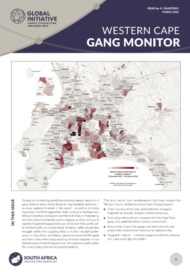
During the monitoring period, hotspots of gang violence were closely linked to fragmentation dynamics – an issue explored in detail in this report – as well as territorial expansion. Conflict triggered by ‘floor-crossing’ is fuelling instability in Factreton, Kensington, and Mitchells Plain.
In Manenberg, the Fancy Boys’s territorial push is ongoing, as they continue to exploit a fragmented gang landscape. In Hanover Park, particularly, factional splits are a major driver of unrest, while a leadership struggle within the Laughing Boys is further escalating tensions. In Lotus River and Ottery, clashes between the Mongrels and their rivals reflect long-standing territorial disputes. In the Steenberg and Muizenberg precincts, the leadership battle within the Junky Funky Kids has resulted in fatalities.
This issue traces four developments that have shaped the Western Cape’s criminal landscape over the past quarter:
- Floor-crossing defections and leadership struggles fragment an already charged criminal landscape.
- Evaluating extraordinary measures for the Cape Flats gang crisis amid the latest military deployment.
- Area profile: Cape Flats gangs and international organized crime extend their influence to Saldanha Bay.
- ‘Klipgooier’ culture – a notable gang recruitment pathway and a key early sign of conflict.
This is the eighth issue of the Global Initiative Against Transnational Organized Crime’s Western Cape Gang Monitor, an output of our South Africa Organized Crime Observatory. This series of bulletins tracks developments in Western Cape gang dynamics each quarter, to provide a concise synthesis of relevant trends to inform policymakers and civil society. The monitor draws on information provided by field researchers working in gang-affected communities of the Western Cape. This includes interviews with current and former gang members, civil society and members of the criminal justice system.