Posted on 10 Jun 2026
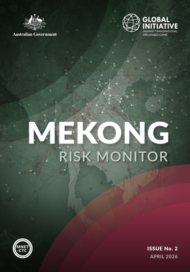
Based on four in-depth case studies from South East Asia, this report finds substantial links between China’s United Front System and criminal elements operating in the region.
The report raises various questions about contemporary state instrumentalization of crime, presenting evidence that the practice has developed and that the Chinese party-state model is a significant regional feature. These dynamics are compared to more widely documented examples of Russian state instrumentalization of criminality, with both identified as specific forms of a single, broader phenomenon.
The purpose of the report is to scrutinize growing evidence of geocriminality in South East Asia and map the emerging landscape. The report makes notable findings in the four countries explored: Thailand, Malaysia, the Philippines and Indonesia. In all four case studies, there is evidence of Chinese party-state association with criminal actors, shaped in part by the expansion of the United Front System under Xi Jinping. The United Front System is a Chinese Communist Party (CCP)-led network that shapes and aligns actors outside the Party (including civil society, private sector, diaspora and other groups) to advance strategic objectives domestically and abroad.
This report also documents the pitfalls Beijing faces in such an approach, which are illustrated with particular clarity in the case of the Philippines. Where alignment with state objectives break down, or when criminal activities result in substantial reputational costs, these actors may become the targets of Beijing’s growing enforcement on Chinese criminal activity overseas.
Although there is some awareness of this developing threat in the countries studied, there remain significant blind spots concerning Chinese criminality in general and criminal links to China’s United Front System within their borders.