Posted on 23 Nov 2026
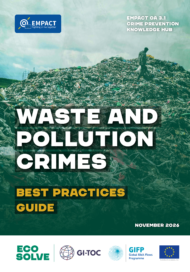
This guide provides a strategic overview of waste and pollution crime as an increasingly interconnected form of organized environmental crime, drawing on open-source literature. It is not intended to be exhaustive but to identify recurring patterns across major waste and pollutant streams. It focuses on the structural vulnerabilities exploited by criminal networks and their implications for EU law enforcement in particular.
Waste and pollution crimes are no longer best understood as isolated environmental offences. Criminal actors increasingly operate through legitimate commercial structures, using licensed companies, brokers, logistics providers, online marketplaces and cross-border trade routes to disguise illicit activity as lawful trade. Across the crimes examined in this guide, the same methods recur: misdeclaration of shipments, falsified documentation, manipulation of customs procedures, exploitation of regulatory differences, and financial fraud. These activities may also intersect with other criminal markets, including illegal resource extraction, reflecting the interconnected nature of organized environmental crime.
The principal crime types covered in this guide include the trafficking of hazardous waste and chemicals, plastic waste, waste electrical and electronic equipment (WEEE), end-of-life vehicles (ELVs) and tyres, fluorinated gases (F-gases) and ozone-depleting substances, and textiles and paper; illegal shipbreaking; maritime pollution; illegal gold mining involving mercury and cyanide; and counterfeiting of plant-protection products and biocides. Although the commodities differ, the underlying operating logic is similar: offenders exploit the gap between legal classification and physical reality, moving material through legitimate supply chains before diverting it towards unlawful treatment, disposal or commercial exploitation. The integration of legal and illegal activities within the same commercial networks makes detection and disruption particularly challenging.
For EU law enforcement, the principal strategic implication is that effective disruption requires more than seizures or increased border controls. Priority should be given to identifying the commercial and financial infrastructure supporting multiple crime types, including repeat brokers, logistics providers, waste contractors, online traders, corporate structures and financial facilitators. This requires structured intelligence-sharing, common risk indicators and closer cooperation between customs, environmental regulators, police, prosecutors, financial intelligence units, civil society and the private sector. However, improved intelligence must be matched by adequate enforcement capacity and translated into practical interventions that address the conditions sustaining criminal markets. Ultimately, success should be measured not only through immediate enforcement outcomes, but through sustained disruption of criminal business models and the prevention of future criminal opportunities.