
Posted on 03 Dec 2025
Across northern Ghana, artisanal and small-scale gold mining (ASGM) operates in a context of informality, porous borders and opaque financial flows, conditions that mirror the environments in which Jama’at Nasr al-Islam wal Muslimin (JNIM) has profited from the gold sector elsewhere in the Sahel. While there is no evidence that JNIM is currently directly engaged in or financially exploiting northern Ghana’s gold sector, there are risks that call for close monitoring of the region.
The gold sector is a critical source of revenue for violent extremist organizations across the Sahel, where groups such as JNIM finance their activities through the taxation and control of mining sites and access routes. In Mali and Burkina Faso, this has enabled the group to expand its influence, drawing on gold-related revenues alongside other resources. Since 2024, JNIM has expanded southwards, and although Ghana has not suffered direct attacks, its Upper West region provides logistical access to supplies including fuel, motorbikes, and explosives.
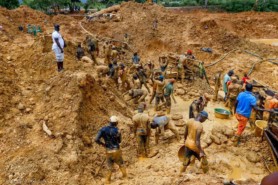
Northern Ghana’s ASGM sector is characterized by rapid, mobile mining operations; unlicensed sites; and the dominance of Burkinabe buyers in the informal gold economy. Estimates indicate that 60%–70% of gold mined in northern Ghana is sold to Burkinabe traders and moved north into Burkina Faso. These flows are shaped by prefinancing arrangements that secure gold before extraction, favourable pricing offered by Burkinabe traders, and capital models that concentrate financial control outside Ghana. The resulting dynamics drive both gold and profits across the border.
Although no evidence of JNIM prefinancing or taxing ASGM operations in northern Ghana was found, the conditions mirror patterns observed in parts of Mali, Burkina Faso and Côte d’Ivoire. Financial opacity and cross-border flows, including gold, cash, explosives and fertilizer, create vulnerabilities. Investigations in West Africa have documented links the diversion of explosives from Ghana’s licensed supply chains into illicit networks supporting extremist groups.
The report also identifies socio-economic and political pressures that may heighten risks. Marginalization of Fulani communities, farmer–herder tensions and grievances related to harassment and exclusion create an environment that armed groups have exploited in other countries.
To safeguard northern Ghana from potential future exploitation, the report recommends accelerating ASGM formalization, strengthening border security and intelligence sharing, disrupting illicit financial flows, enhancing community-level early warning systems and addressing Fulani grievances. These actions are crucial for developing a more resilient ASGM sector and reducing the risks associated with cross-border extremist activity.