Posted on 29 Apr 2026
Every year, thousands of cars are stolen across the UK and Europe. Some are stripped for parts, some are sold in domestic markets, and others are moved across borders into global second-hand vehicle supply chains. Once they leave their country of origin, tracing where they go and who profits becomes far more difficult.
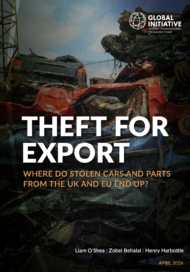
This report follows the export trade in stolen cars and vehicle parts from the UK and EU, examining how vehicles are stolen, processed, shipped and absorbed into overseas markets. It looks in particular at the Democratic Republic of Congo and the United Arab Emirates, two very different nodes in the wider trade: one a smaller destination market for high-end vehicles, the other a major commercial hub through which cars and parts can be redistributed to markets across Africa, the Middle East and beyond.
The research shows how stolen vehicles can move through legitimate-looking channels, relying on the same infrastructure that supports the legal trade in used cars and spare parts. Garages, brokers, freight companies, dealers, shipping agents and informal intermediaries all play a role in moving goods from theft to resale. Along the way, paperwork can be falsified, vehicle identities altered and stolen origins obscured.
The report also highlights why this market is difficult to disrupt. Vehicle theft has often been treated as a lower-priority crime, while the cross-border nature of the trade fragments responsibility between police forces, customs agencies, ports, insurers and private companies. In destination and transit markets, weak checks on provenance mean that stolen cars and parts can be traded with limited risk once they have entered commercial circulation.
Rather than focusing only on overseas markets, the report argues that stronger action is needed at the point of origin. Better intelligence-sharing, targeted investigations into organizers and facilitators, tighter scrutiny of export logistics, and closer cooperation with manufacturers, insurers and tracking companies could make theft for export harder, riskier and less profitable.