Posted on 26 Jun 2026
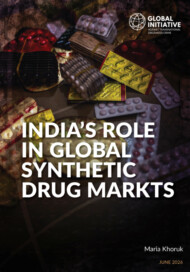
India is sometimes referred to as ‘the pharmacy of the world’, as it supplies 20% of the global demand for generic drugs – cheaper, legal alternatives to brand-name medicines. In 2023 (the year for which the latest data is available), the country was the largest manufacturer in the world of controlled psychotropic substances in terms of gross weight, according to the International Narcotics Control Board (INCB). The country also has significant illicit drug markets.
The prevalence of illicit opioid use in India is estimated to be three times the global average. In his 2025 speech, the country’s home affairs minister, Amit Shah, stated that 7% of the Indian population uses drugs, or roughly 102 million people. The country has the largest youth population in the world, with 65% of the population under the age of 35. Although India surpassed the UK as the world’s fifth-largest economy in 2023, inequality has been consistently increasing since the 1990s.
India is situated at the intersection of the illicit drug flows from two key drug-producing regions, the so-called Golden Crescent (encompassing the border regions of Afghanistan, Pakistan and Iran) and the Golden Triangle (including Myanmar, Laos and Thailand), and has been historically affected by heroin flows from both directions.
All of these factors – the vast chemical and pharmaceutical industry; the large youth population; a fast-growing, highly unequal economy; and its strategic geographic location – mean that illicit drug economies are likely to have a significant impact on India. Although India’s drug markets have traditionally been dominated by cannabis and heroin, synthetic drugs have become more widespread in the past two decades. Owing to their diversity, high potency and ubiquity synthetic drugs present additional challenges to law enforcement. While the prices of synthetic drugs vary, they are significantly cheaper than heroin or cocaine, making them more accessible.
This report addresses persistent gaps in the understanding of India’s role in global illicit synthetic drug markets. It examines the trafficking and distribution dynamics that connect these markets to regional and international supply chains, focusing on high-volume maritime shipments, trafficking by air, and the growing influence of online markets in decentralizing the trade. It also identifies key weaknesses in current responses to this developing threat and sets out priority areas for policymakers and law enforcement.