Posted on 12 Aug 2026
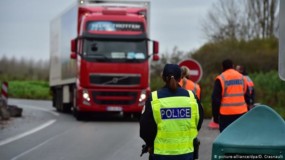
In February 2023, French border police opened a truck in Calais and found 58 people hidden inside. At first glance, it appeared to be a typical case of Channel smuggling. But this journey was running in reverse. The group, made up of Moroccan, Tunisian and Algerian nationals, had just left the UK, where they had in fact entered legally, on visitor visas.
Smuggling across the Channel is generally assumed to be a one-way process from Europe to the UK. However, a small but growing number of people are paying criminal networks to transport them irregularly in the opposite direction, usually in trucks leaving Dover. The trend is driven by policy rather than conditions in countries of origin, and has exposed a gap in how London and Paris perceive the problem.
The truck seized in February belonged to Madjid Belabes, an Algerian-born, London-based smuggling facilitator. He was found to have arranged 26 illicit trips between December 2022 and September 2023, charging £1 200 per person and making nearly £290 000 in total, and was jailed for 10 years. Four Algerian taxi drivers were also convicted for their part in the scheme, which involved collecting migrants in London and transporting them to waiting trucks at service stations and lay-bys in Kent.
A parallel network, led by Algerian national Azize Benaniba, facilitated over 20 trips from Dover to Calais in 2023, generating an estimated £500 000. This gang also brought migrants of North African origin into the UK on tourist visas, before transporting them to France by truck. On one occasion, a group that included children as young as five was forced into an airtight, refrigerated trailer. A long delay at Dover put their lives at severe risk before they were rescued by authorities. In total, 157 migrants were intercepted during the months-long investigation, and Benaniba and six of his associates were sentenced to a combined 69 years in prison.
More recently, in September 2025, two Romanian truck drivers were arrested at Dover, after being discovered transporting 49 people, mainly Bangladeshi nationals, whom they had collected from lay-bys in Kent. The following January, a surveillance operation intercepted 23 Bangladeshi men who had been taken by taxi from London to a truck near Dover’s ferry port. Twenty-two of these migrants were found to be lawfully in the UK and were released. Three taxi drivers were arrested alongside the network’s suspected ringleader. In all instances, the migrants were to be transported across the Channel in the direction of mainland Europe.
A market in the making
These nascent networks appear to operate according to a modular rather than hierarchical logic. Organizers coordinate routes and clients, while logistics handlers arrange transport and staging. Opportunistic actors, such as taxi and truck drivers, and sometimes migrants themselves, are paid small amounts for transport on individual legs of the journey. Dover has become a temporary accumulation point, with people sheltering under bridges and near freight parking, in scenes reminiscent of the Calais Jungle.
This contrasts sharply with the market running the other way. After a decade of enforcement on the French coast, small-boat smuggling is dominated by highly organized Kurdish networks, as sustained pressure favoured the actors best equipped to withstand disruption. These groups arbitrate who departs and from where, and they have defined zones and engage in violent competition over launch sites.
There has been no such consolidation in Dover. Instead, the UK market resembles the early stages of a smuggling economy, before enforcement pressure selects for the actors best equipped to survive. Here, individuals from Algeria, Romania, Poland, Lithuania and South Asia handle recruitment, transport and concealment, with no single group controlling the entire chain. Nor is the direction of travel fixed: some of the gangs and drivers smuggling migrants out of the UK will gladly do the opposite when required.
The drivers of departure
Reverse smuggling is fuelled by three interconnected forces: legal-entry asymmetries between the UK and the Schengen area, mobility constraints created by Brexit, and mounting pressures relating to immigration enforcement in the UK.
In recent years, Britain has become a less restricted gateway to Europe for some nationalities, particularly in light of tighter immigration policies in the Schengen zone. Migrants arrive in the UK on visitor or study visas and move onto smuggling routes towards the continent, sometimes within days. As the initial entry is lawful, this is a loophole that cannot be closed by standard enforcement measures.
However, as a UK visa no longer confers Schengen access, what was once legal onward travel has now become irregular for many migrants. And criminal networks have moved to exploit the gap; the increase in reverse smuggling coincides with France’s tightening of visa issuance since September 2021.
A second source of demand is generated in the UK itself, where prolonged processing times for asylum and immigration applications, homelessness and repeated encounters with enforcement authorities have become significant push factors. The Home Office reported a near 50% increase in disruptions to ‘organized immigration crime’ in the year to March 2026. For some migrants, this is a central incentive, driven by the belief that they can move more freely or remain undetected once inside the Schengen area.
The Home Office stopped publishing its exit-check statistics after 2020, and in 2026, data problems meant that it was impossible to estimate how many overstayers were in the UK. Consequently, a population with strong incentives to leave and extensive exposure to smuggling networks remains largely invisible to policymakers.
A new pull factor emerged in 2026, but it was based on a false premise. In April, Spain introduced a regularization programme offering residence and work rights to undocumented migrants. Subsequent investigations found that smugglers were advertising passage out of Britain for between £980 and £1 450, targeting student visa overstayers from the Indian subcontinent and promoting Spain as a pathway to legal status, employment and eventual citizenship, despite an important caveat: the scheme required proof of presence before 31 December 2025, and applications closed on 30 June 2026, meaning that anyone smuggled out of Britain during 2026 was ineligible. This illustrates how these networks often seize on policy announcements and repackage them as marketing tools.
Rethinking the policy response
Border controls on both sides of the Channel are designed to prevent movement into Britain. Checks on outbound traffic are limited, and authorities often have little legal basis to intervene when people seek to leave. Much of the market is thus the result of policy design rather than border evasion. Where lawful entry into Britain is more accessible than into the Schengen area, criminal networks profit. This is fundamentally a coordination problem between governments that cannot be solved through enforcement at Dover alone.
The way in which the authorities respond will influence how the situation develops. Exercising sustained pressure on a fragmented smuggling environment will not necessarily eliminate it; instead, it will favour the groups best able to absorb risk and evade detection. These actors are often better financed, more organized and more willing to use coercion. Dover now stands where Calais stood a decade ago, when a relatively open market began to consolidate around a smaller number of dominant networks.
Channel smuggling is no longer primarily a one-way phenomenon. It moves in both directions, using shared infrastructure, driven by discrepancies in two legal systems that no longer align. Recognizing this is the first step towards a more coherent UK-EU response.
The policy brief ‘Breaking the policy trap’ examines irregular migration in greater detail, with a particular focus on Channel crossings and recommendations for the Burnham government.