Posted on 16 Dec 2025
In an increasingly polarized international order, the UN faces budgetary constraints and deepening paralysis within the Security Council, eroding its capacity to respond to some of the world’s most pressing conflicts. Against this backdrop, in early November the Peace Operations Review Week took place in New York, convening experts in peace operations and crisis management to contribute to the UN’s Review on the future of all forms of peace operations.
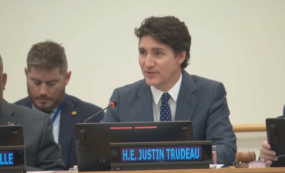
A round table was held on the future of operations in Haiti, acknowledging the UN’s involvement in the country over the past 30 years. Hosted by Canada and co-organized by the Global Initiative Against Transnational Organized Crime, among others, the discussion identified lessons for Haiti, as well as for the future of UN peace efforts more generally.
While UN political offices and peacekeeping missions are not usually associated with combating transnational organized crime, discussions throughout the week made it clear that this is no longer the case. Organized crime and its accelerating impact on conflict dynamics, as well as the UN’s difficulties in addressing these challenges, were recurring themes in debates.
States continue to operate with mandates, tools and timelines ill-suited to a political economy dominated by organized crime. Security interventions that avoid confronting criminal governance head-on risk stabilizing fragments of society while leaving intact the structures that finance, arm and legitimize organized crime. This sets the stage for a deeper examination of how the UN must adapt its tools to the changing nature of organized crime.
Illicit economies fuel insecurity and conflict, as peace operations in Somalia, the Central African Republic and the Democratic Republic of the Congo have seen. Peace operations must understand how illicit economies impact the pursuit of peace and security.
The interdependence between politics, illicit economies and violence was particularly evident during the session on Haiti. Insecurity and political instability in the country stem from corruption and the violent relationships between elites and armed groups. Haiti is no longer facing a conventional security crisis. Armed gangs have emerged as parallel sovereigns, enforcing order through violence. The result is not simply insecurity, but a fragmented system of governance in which the state’s authority is hollowed out by criminal rule.
This reality has exposed a fundamental mismatch between the nature of Haiti’s crisis and the responses designed to address it. Following nearly three decades of UN engagements in Haiti that have not resulted in long-term stability, there was broad consensus on the need for peace operations to recalibrate their approach. The recent authorization by the Security Council of a Gang Suppression Force (GSF) is intended to bolster efforts to retake gang territory in Port-au-Prince, where it is estimated that gangs control around 90 per cent of the city. The GSF is intended to be more robust than the previous Multinational Security Support (MSS) mission. Its mandate calls for the force to conduct ‘intelligence-led targeted, counter-gang operations to neutralize, isolate, and deter gangs’ independently or with Haitian security forces.
The GSF is a new twist on the UN peace operations model. It will be overseen by a coalition of member states outside the UN, sustained by a UN Support Office in Haiti, and work with the existing UN office in Haiti and other UN agencies. This configuration is meant to respond to some of the challenges faced by the MSS, which struggled to obtain voluntary funding and did not manage to deploy more than 1 000 police officers of a projected requirement of 2 500.
The GSF will be funded mostly through UN-assessed contributions, a more stable funding source than voluntary contributions, although some voluntary funding will still be needed, for example to pay for support for troops on the ground. However, the MSS example raises concerns about the new mission’s ability to raise funds. So far only two countries, Canada and Germany, have pledged a total of US$35 million. While the GSF was initially slow to attract new personnel, countries have now pledged more than 3 500 troops. But pledges are not the same as deployments: countries will now have until February 2026 to finalize their pledges before deployments begin later in the year.
Participants in the Haiti session noted that while improving security is crucial for progress, a security-focused approach alone would be insufficient. The UN, supported by civil society organizations, must play a role by analyzing the gang phenomenon, advising the Haitian police, supporting the justice system and demobilizing children, who make up a significant proportion of gang members. Reintegration must include reconciliation mechanisms to rebuild trust within communities and restore a sense of shared citizenship.
While arms embargoes and counter-drug trafficking mandates are largely in place, their effectiveness ultimately depends on sustained political commitment to tackling organized crime networks. Without a whole-of-system approach, efforts to tackle specific symptoms of the problem will not succeed, or their success will be short-lived. Participants noted that peace operations, which are deployed for a year at a time, focus on short-term measures; yet real progress against the complex, networked, transnational organized crime systems requires a long-term strategy.
Given the steep decline in resources, the UN will be compelled to reduce its activities. However, the organization must be strategic in choosing where to focus its efforts. Assisting UN peace operations to better address the root causes of insecurity and conflict, such as corruption and illicit economies, should be a key priority.
A forthcoming report by the GI-TOC focuses on UN and international responses to changing transnational organized criminal dynamics in Haiti over the past two decades, and makes a series of recommendations for future action.