Posted on 20 Mar 2026
The conflict in Sudan has triggered the world’s largest child displacement crisis. Since war erupted between the paramilitary Rapid Support Forces (RSF) and the Sudanese Armed Forces in April 2023, more than 12 million people have been forced to flee their homes. Of the 4.3 million who have sought refuge in neighbouring countries, at least half are estimated to be children.
While most of these children are displaced alongside their families, an increasing number are crossing borders alone. As they navigate displacement without the protection of caregivers, they are at acute risk of criminal exploitation along the route and in neighbouring host countries, including Libya.
A growing child displacement crisis in Darfur
While unaccompanied children have been displaced throughout the war, clashes in the Darfur region have intensified the humanitarian emergency. Since late 2024, the area has been engulfed by intense fighting, including coordinated attacks on civilians and widely documented mass atrocities. In late 2024, local contacts indicated that roughly 7 000 refugees were arriving in Libya’s south-eastern city of Kufra each week, up from around 1 200 per week in September.
Around 2 percent of these arrivals are believed to be unaccompanied and separated children. Although precise data is unavailable, estimates from Sudanese community representatives, humanitarian actors and local activists suggest that their total presence in Libya had grown to around 10 000 children by the end of 2025.
Most belong to Darfuri African tribes, like the Fur, Zaghawa and Masalit, who have been directly targeted by ethnically motivated violence carried out by the RSF. Most are reportedly boys aged between seven and 17. While young girls do travel alone, this is less common due to the heightened risk of sexual abuse and prevailing gender norms surrounding women travelling unaccompanied.
For many of these children, arrival in Libya follows the loss of caregivers to violence in Sudan or along the smuggling routes used by refugees to reach safety. Others are sent ahead by their families when violence escalates or resources become scarce. In this context, children are usually prioritized either to protect them from immediate risks or in the hope that they can later provide financial support to facilitate the movement of the remaining family.
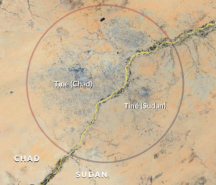
Like adults, children rely on cross-border smuggling networks. Until May 2025, most travelled north through the state of North Darfur, crossing into Libya through the tri-border area of Sudan, Egypt and Libya. When this route was effectively closed in June 2025, however, movement continued, with the flow of people being diverted west into Chad before turning north-east again towards Kufra.
While some children travel alone, others move with loosely connected groups of adults, who take them along as they flee. This allows them to benefit from collectively negotiated rates or, in some cases, free passage. In other instances, families arrange for smugglers or intermediaries to escort their children into Libya. But these arrangements typically end upon arrival in an urban centre, leaving the children to fend for themselves.
Most children are thought to have settled in the greater Tripoli area, partly because of the prospect of receiving assistance from the UN Refugee Agency, which runs the country’s only registration office there. A smaller but significant number are believed to have dispersed across the north-east of the Cyrenaica, mainly in the cities of Benghazi, Tobruk and Ajdabiya, as well as in the south-western cities of the Fezzan, particularly Sebha. Those moving north-east often do so to join the expanding Sudanese community, which grew markedly in 2025. Only a few are likely to remain in Kufra.
“Unaccompanied children faced heightened risks of sexual violence, exploitation and forced recruitment into armed groups.”
High exposure to trafficking risks
The region’s smuggling corridors are systematically exploited by criminal networks. Following the RSF’s takeover of El Fasher in October 2025, UN experts expressed concern over reports of human trafficking, warning that unaccompanied and separated children faced heightened risks of sexual violence, exploitation and forced recruitment into armed groups.
The risk continues inside Libya, where trafficking networks regularly abduct migrants for ransom, particularly in the centre and south-east of the country. In June 2025, an unaccompanied Sudanese boy was abducted and taken to an undisclosed location near Kufra. Footage of his torture for ransom later circulated online.
Trafficking and exploitation extend beyond the border into Libya’s urban centres, where, in the absence of protection and guardianship, forced labour and child begging thrive. Adolescents are especially vulnerable to economic exploitation. To survive, many seek daily work in the informal economy, on construction sites, in small workshops or in domestic service. Employers are known to target them as low-cost workers, and to assign them physically demanding duties.
Younger children, for whom work opportunities are limited, often resort to begging or selling small items in public spaces. While this may occur without coercion, community members and local contacts have raised concerns about exploitative practices. Most of the children live in informal shacks or in shared, camp-like settings with unrelated Sudanese adults, who often force them into begging under threat of eviction. There is also a high incidence of sexual abuse within these housing arrangements, and both boys and girls are at risk of being forced into sex work.
Children are routinely drawn into Libya’s migrant detention system, where systemic abuse and exploitation, including forced labour and pay-for-release schemes, have been well documented. Many are arrested during anti-migrant crackdowns, such as the security campaign that targeted north-western cities in March 2025. Authorities also conduct anti-begging operations – such as the sweep of Benghazi in August 2025 – that have resulted in the detention of numerous children. Within these facilities, humanitarian workers report that boys are often held alongside adult men, which significantly increases their risk of sexual abuse.
As well as facing criminal threats, many children arrive in Libya acutely malnourished, amid unprecedented levels of child hunger in Darfur. This is the result of ongoing fighting and the RSF’s targeted starvation strategy. According to humanitarian workers, a significant number are deeply traumatized, after witnessing or enduring extreme violence, and urgently need medical care. Most also lack identification documents, effectively excluding them from basic services such as health care and education.
Looking ahead
Local observers have described the situation facing these children as a ‘social and humanitarian time bomb’, which is likely to deteriorate further as the conflict in Sudan shows no signs of abating.
Without rapid and coordinated action to scale up protection, documentation and alternative housing options, these children will continue to be absorbed into Libya’s informal and parallel economies, where structural vulnerability, exploitation and abuse reinforce each other.