Posted on 06 Jan 2026
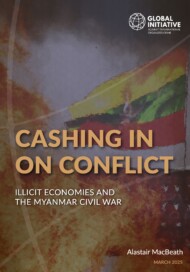
One of the most significant assumptions shaping current security narratives in the Mekong region is that Myanmar’s 2021 coup triggered an unprecedented and immediate surge in methamphetamine production. This report shows that this dominant narrative is not supported by available evidence. Instead, the analysis finds that the balance of evidence points to a long-term upward trajectory in production, covering the period both before and after the coup. This trajectory has been driven by improvements in synthesis processes, management and operational efficiencies, including adaptations made during the COVID-19 pandemic period and in response to current border interdictions targeting cyber-fraud compounds.
According to this study, the Mekong region –particularly Myanmar’s Shan State– is the epicentre of one of the largest and most sophisticated illicit drug economies in the world. It produces staggering quantities of methamphetamine for markets across South East Asia, the Pacific and, increasingly, the world. The findings challenge the idea that instability created by the coup produced an acute surge in production. Instead, they show that the architects of the coup were often the same actors who patronize and profit from the meth trade, enabling a continuation of “business as usual” in drug-producing areas such as Shan State and the Border Guard Force enclaves in Kayah and Kayin.
The report deconstructs the dominant narratives that have shaped regional counternarcotics operations and analysis. It highlights the limitations of seizure data as a proxy for production, noting that seizures are reflective of law enforcement activity and subject to political, budgetary and operational influences. They cannot reliably indicate production volumes, nor can the absence of seizures serve as evidence of an absence of supply. Retail price declines in the region are also shown to have long preceded the coup, undermining the notion of a post-coup production surge.
The analysis documents the structural reality of the Mekong methamphetamine economy, including diversification into new synthetic commodities such as benzodiazepines, tramadol, fentanyl, antidepressants and polydrug concoctions known as Happy Water and Happy 5. Producers have mastered chemical substitution by moving away from ephedrine and pseudoephedrine toward a wide range of pre-precursors, increasing efficiency and complicating efforts to control chemical inputs.
Another major shift identified in this report is the rise of the “landlord” model, in which commanders move away from direct involvement in production and instead tax, protect and broker output. This has created a resilient and highly profitable system that continues to expand transnationally. Flows documented in our analysis include western routes across the Rakhine frontier into Bangladesh and India, maritime shipments into the Indian Ocean region, and penetration into markets as distant as Australia, New Zealand, Africa, Europe and North America.
Finally, the study warns that the Mekong region has become an operational epicentre for what is today a global illicit drug commodity. A key driver of this evolution is the inherent nature of the commodity itself. Methamphetamine is cheap to produce, chemically flexible and lacks significant product differentiation regardless of its point of origin. Thus, a high-purity crystalline product synthesized in Shan State is functionally identical to one produced in the Mexican state of Michoacán or Afghanistan’s Farah province, allowing it to be seamlessly accepted by distant stimulant markets with minimal friction. This fungibility removes barriers to export market entry. It encourages organized criminal groups to treat methamphetamine as a universal product, the value of which is increasingly being determined by purity and availability rather than by brand or origin point, perfectly engineering it for rapid, opportunistic expansion into global marketplaces with a latent demand for stimulants.
The report findings call for a fundamental rethink of policy responses and a recognition of the emergence of an adaptive and structurally embedded global enterprise. This necessitates a strategic pivot away from a singular focus on the Mekong production heartland of Shan State and its border regions and towards the transnational criminal networks and globalized supply chains that enable its global reach.