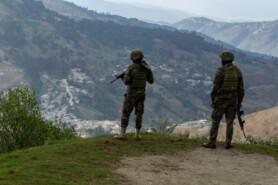
Women and girls are on the front line of Haiti’s security crisis. Across gang-controlled areas, the threat of rape, sexual exploitation and abuse by armed groups has become an everyday reality, making sexual and gender-based violence one of the most devastating consequences of the conflict.
The erosion of state authority in Haiti has led to unprecedented levels of violence. Between 2024 and 2025, over 11 000 people were killed and more than 4 900 injured in gang conflicts. By May 2026, more than 1.4 million people had been displaced, representing 11% of the country’s population, with children making up over half of the total.
But these figures obscure the alarming levels of sexual and gender-based violence (SGBV). In the first six months of 2026 over 5 500 incidents of SGBV – about 30 cases a day – were recorded, 87% of which were collective rape. Women and girls are routinely abducted from their homes or from public transport, held for days or weeks, and raped repeatedly. Some gang members have even filmed assaults and circulated the footage to extort ransoms from families or to publicly humiliate the victims. These acts are systematic and intended to subject communities to so-called discipline, punish perceived opponents and reinforce gang authority. They are a central mechanism of the current system of criminal governance.
The analytical framework that positions SGBV as a weapon of war offers a useful perspective in this context. Though Haiti’s situation is officially viewed as a criminal crisis rather than an armed conflict, these groups’ territorial ambitions, governance structures and access to military-grade weapons place them closer to armed groups than neighbourhood gangs.
Because of this, Colombia’s civil war in the 1990s and early 2000s is a useful reference point. The Colombian government’s response after disarmament demonstrated that recognizing SGBV as a means of territorial control can transform how the problem is understood and addressed. Three lessons from Colombia’s experience are particularly relevant for Haiti today.
Recognizing that SGBV is central to criminal governance
During Colombia’s long-running civil war, SGBV was widely understood as one of the many consequences of the conflict. However, over time, documentation by survivors, researchers, civil society organizations and state institutions gradually revealed that armed actors had deliberately and systematically used sexual violence to intimidate communities and impose authority. It was increasingly recognized not merely as a byproduct of the fighting, but as a deliberate instrument of enforcing social order.
The first lesson for Haiti is thus the need for a shared analytical framework. Institutions, donors, the media and civil society must be able to identify recurring patterns, distinguish isolated incidents from systematic practices and document how SGBV functions within broader strategies of criminal governance.
This will necessitate looking across both actors and spaces. Gangs use rape, sexual torture, forced relationships and sexual slavery in ways that extend beyond individual acts of violence. Reports indicate that gang members demand sexual access to girls, including minors, as an explicit exercise of power – a power that determines whether a person is allowed to remain in the area, eat, access water, receive humanitarian aid, and use other services controlled by the gang. Abuses committed by police, self-defence brigades and other armed actors must be documented within the same framework.
The geography of violence is equally important. A woman crossing a series of gang-controlled checkpoints in a single day, whether to sell goods, reach a market or visit a clinic, is forced to navigate overlapping systems of coercion where SGBV is a constant risk. Recognizing these threats is the first step towards making gender-based violence visible and addressing it as a systematic rather than an isolated problem.
Put SGBV at the centre of disarmament, demobilization and reintegration and transitional justice
Haiti’s justice system has effectively collapsed, with severe implications for survivors of sexual violence. Stigma, fear of reprisals and a lack of confidence in institutions all discourage the reporting of abuse, while gangs continue to act with impunity. With political transition and elections on the horizon, Haiti has a critical window of opportunity to address these failures. SGBV must be placed at the centre of any future disarmament, demobilization and reintegration efforts, as well as broader transitional justice processes.
Colombia’s experience offers two particularly relevant lessons in this regard. First, patterns of abuse must be documented before a demobilization deal is signed. In Colombia, judicial interventions such as Auto 092 (2008) and subsequent investigations by the Special Jurisdiction for Peace helped to demonstrate the widespread and systematic nature of sexual violence, classifying it as torture and requiring public acknowledgment by the perpetrators before survivors.
Second, justice and support mechanisms should be designed with survivors in mind. In Colombia, for example, survivor networks, memory work, art and storytelling helped reduce isolation, build agency and support healing. Organizations such as Ruta Pacífica de las Mujeres, Corporación Sisma Mujer and the Liga de Mujeres Desplazadas achieved this by operating from within communities, combining psychosocial support with legal aid, and placing survivor leadership at the centre of their work – making assistance accessible, safe and responsive to the needs of women living with ongoing violence.
Many Haitian women affected by the crisis live in gang-controlled neighbourhoods or displacement sites, where seeking help can expose them to further risk. For assistance to be effective, it must be accessible, safe and attuned to the realities survivors face.
Beyond emergency care: sustained support for survivors
Survivors of sexual abuse need long-term, sustained support, including safe spaces in which to relay their accounts, institutions capable of handling cases with dignity and confidentiality, and meaningful access to justice. Colombian initiatives led by the National Centre for Historical Memory, the Truth Commission and women’s organizations such as Ruta Pacífica de las Mujeres have opened paths to justice by documenting sexual violence as a systematic pattern rather than isolated incidents, creating survivor-led testimony processes with integrated psychosocial support, and producing gender-sensitive historical records that have informed both judicial proceedings and reparations frameworks, shifting survivors from passive witnesses to active participants in truth-building.
In Haiti, civil society has stepped in where the state has failed. Feminist and women-led groups, humanitarian actors and local organizations provide emergency care, psychosocial first aid, emergency contraception, shelter, protection and legal support through networks built on the ground.
However, these underfunded and overstretched organizations cannot meet all needs or reach every survivor. In addition, emergency care alone falls short of what survivors require. While civil society can help build the foundations for recovery, the responsibility ultimately rests with the state.
Colombia’s recognition of sexual violence as a weapon of control in the context of armed conflict paved the way for genuine accountability. While its transitional justice mechanisms were far from perfect, they helped document patterns of abuse by various armed groups and in many different contexts. Haiti lacks an equivalent framework but can start gathering evidence now to establish what happened, where, against whom, under whose command and for what intent. Building that record today will lay the foundations for justice, reparations and healing tomorrow.
La violence sexuelle et de genre comme outil de gouvernance criminelle en Haïti
Trois enseignements tirés de la guerre civile en Colombie
Les femmes et les jeunes filles sont en première ligne de la crise sécuritaire en Haïti. Dans les zones contrôlées par les gangs, la menace de viol, d’exploitation sexuelle et d’abus de la part des groupes criminels est devenue une réalité quotidienne, faisant de la violence sexuelle l’une des conséquences les plus dévastatrices du conflit.
L’érosion de l’autorité de l’État en Haïti a entraîné des niveaux de violence sans précédent. Entre 2024 et 2025, plus de 11 000 personnes ont été tuées et plus de 4 900 blessées dans le cadre de violences liées aux gangs. En mai 2026, plus de 1,4 million de personnes avaient été déplacées, soit 11 % de la population du pays, les enfants représentant plus de la moitié de ce total.
Mais ces chiffres masquent l’ampleur alarmante de la violence sexuelle et de genre (VSG). Entre janvier et juin 2026, 5 500 cas de VSG ont été recensés, 30 cas par jour, dont 87 % auraient été des viols collectifs. Des femmes et des filles sont régulièrement enlevées à leur domicile ou dans les transports en commun, retenues pendant des jours, voire des semaines, et violées à plusieurs reprises. Certains membres de gangs ont même filmé ces agressions et diffusé les images afin d’extorquer des rançons aux familles ou d’humilier publiquement les victimes. Ces actes sont systématiques et visent à « discipliner » les communautés, à punir ceux qu’ils considèrent comme des opposants et à renforcer l’autorité des gangs. Ils constituent un mécanisme central du système actuel de gouvernance criminelle.
Le cadre analytique qui considère la violence sexiste comme une arme de guerre offre une perspective utile sur cette crise. Bien que la situation en Haïti soit officiellement considérée comme une crise d’ordre criminel plutôt que caractérisée comme un conflit armé, les ambitions territoriales de ces groupes, leurs structures de gouvernance et leur accès à des armes légères les rapprochent davantage des groupes armés que des simples gangs de quartier.
Dans ce contexte, la guerre civile colombienne des années 1990 et du début des années 2000 constitue un point de référence utile. La réponse apportée par le gouvernement colombien après le désarmement a démontré que le fait de reconnaître la VSG comme un moyen de contrôle territorial peut transformer la manière dont le problème est compris et traité. Trois enseignements tirés de l’expérience colombienne sont particulièrement pertinents pour Haïti aujourd’hui.
Reconnaître que la violence sexuelle est au cœur de la gouvernance criminelle
Au cours de la longue guerre civile colombienne, la VSG était généralement considérée comme l’une des nombreuses conséquences du conflit. Cependant, au fil du temps, les témoignages des survivants, des chercheurs, des organisations de la société civile et des institutions publiques ont progressivement révélé que les acteurs armés avaient délibérément et systématiquement recouru à la violence sexuelle pour intimider les communautés et imposer leur autorité. Elle a été de plus en plus reconnue non pas simplement comme un effet secondaire des combats, mais comme un instrument délibéré visant à faire respecter l’ordre social.
La première leçon à tirer pour Haïti est donc la nécessité d’un cadre analytique commun. Les institutions, les bailleurs de fonds, les médias et la société civile doivent être en mesure d’identifier les schémas récurrents, de distinguer les incidents isolés des pratiques systématiques et de documenter la manière dont la violence sexuelle s’inscrit dans des stratégies plus larges de gouvernance criminelle.
Cela nécessitera d’examiner à la fois les acteurs et les espaces concernés. Les gangs recourent au viol, à la torture sexuelle, aux relations forcées et à l’esclavage sexuel d’une manière qui dépasse le cadre des actes de violence individuels. Selon des témoignages recueillis, des membres de gangs exigeraient un accès sexuel à des filles, y compris mineures, comme exercice explicite de pouvoir — un pouvoir qui détermine si une personne est autorisée à rester dans la zone, à manger, ou à accéder à l’eau, à l’aide humanitaire et aux autres services contrôlés par le gang. Les abus commis par la police, les brigades d’autodéfense et d’autres acteurs armés doivent être documentés dans ce même cadre.
La géographie de la violence revêt une importance tout aussi grande. Une femme qui franchit en une seule journée une série de checkpoints contrôlés par des gangs, que ce soit pour vendre des marchandises, se rendre sur un marché ou se rendre dans un dispensaire, est contrainte de naviguer entre des systèmes de coercition qui se chevauchent, où la violence sexuelle constitue un risque constant. Reconnaître ces menaces constitue la première étape pour rendre visible la VSG et la traiter comme un problème systémique plutôt qu’isolé.
Placer la violence sexuelle au cœur de la démobilisation et de la justice transitionnelle
Le système judiciaire haïtien s’est de fait effondré, ce qui a de graves conséquences pour les survivantes de violences sexuelles. La stigmatisation, la crainte de représailles et le manque de confiance dans les institutions découragent toutes les victimes de signaler les abus, tandis que les gangs continuent d’agir en toute impunité. Avec la transition politique et les élections qui se profilent à l’horizon, Haïti dispose d’une occasion unique de remédier à ces défaillances. Les violences sexuelles et basées sur le genre doivent être placées au cœur de tout effort futur de désarmement, de démobilisation et de réintégration (DDR), ainsi que des processus plus larges de justice transitionnelle.
L’expérience de la Colombie offre deux enseignements particulièrement pertinents à cet égard. Premièrement, les pratiques d’abus doivent être documentées avant la signature d’un accord de démobilisation, comme ce fut le cas avec les Forces armées révolutionnaires de Colombie (FARC) en 2017. En Colombie, des interventions judiciaires telles que l’Auto 092 (2008) et les enquêtes menées par la suite par la Juridiction spéciale pour la paix ont permis de démontrer le caractère généralisé et systématique des violences sexuelles, en les qualifiant de torture, les auteurs étant tenus de reconnaître publiquement leurs actes devant les survivantes.
Deuxièmement, les mécanismes de justice et de soutien doivent être conçus en tenant compte des survivantes. En Colombie, par exemple, les réseaux de survivantes, le travail de mémoire, l’art et le partage de témoignages ont contribué à réduire l’isolement, à renforcer l’autonomie et à favoriser la guérison. Des organisations telles que Ruta Pacífica de las Mujeres, Corporación Sisma Mujer et la Liga de Mujeres Desplazadas y sont parvenues en travaillant directement au sein des communautés, en apportant un soutien psychosocial parallèlement à une assistance juridique, et en plaçant le leadership des survivantes au cœur de leur action. De nombreuses femmes haïtiennes touchées par la crise actuelle vivent dans des quartiers contrôlés par des gangs ou dans des sites d’accueil, où le fait de demander de l’aide peut les exposer à des risques supplémentaires. Pour que les initiatives de recherche de la vérité, les réparations, le soutien psychosocial et l’assistance juridique soient efficaces, ils doivent être accessibles, sûrs et adaptés aux réalités auxquelles les survivantes sont confrontées.
Aller au-delà des soins d’urgence pour offrir un soutien durable aux survivantes
Les victimes d’abus sexuels ont besoin d’un accompagnement à long terme et continu, notamment d’espaces sécurisés où elles puissent raconter leur histoire, d’institutions capables de traiter ces dossiers dans le respect de la dignité et de la confidentialité, ainsi que d’un accès effectif à la justice. En Colombie, des initiatives menées par le Centre national de la mémoire historique, la Commission de la vérité et des organisations de femmes ont ouvert la voie à la justice en documentant la violence sexuelle comme un phénomène systémique plutôt qu’isolé, en mettant en place des processus de témoignage menés par les victimes et s’accompagnant d’un soutien psychosocial intégré, et en produisant des archives historiques tenant compte des questions de genre qui ont éclairé les procédures judiciaires et les cadres de réparation. Ces mesures ont contribué à faire passer les victimes du statut de témoins passifs à celui de participants actifs à la recherche de la vérité.
En Haïti, la société civile est intervenue là où l’État a failli à ses obligations. Des groupes féministes et dirigés par des femmes, des acteurs humanitaires et des organisations locales fournissent des soins d’urgence, des premiers secours psychosociaux, une contraception d’urgence, un hébergement, une protection et un soutien juridique grâce à des réseaux mis en place sur le terrain. Cependant, ces organisations, qui manquent de moyens financiers et sont débordées, ne peuvent pas répondre à tous les besoins ni atteindre toutes les survivantes. De plus, les soins d’urgence ne suffisent pas à eux seuls à répondre aux besoins des survivantes. Si la société civile peut contribuer à jeter les bases du rétablissement, la responsabilité incombe en dernier ressort à l’État.
La reconnaissance par la Colombie de la VSG comme arme de contrôle dans le contexte d’un conflit armé a ouvert la voie à une véritable responsabilisation. Bien que ses mécanismes de justice transitionnelle aient été loin d’être parfaits, ils ont permis de documenter les schémas d’abus commis par divers groupes armés et dans de nombreux contextes différents. Haïti ne dispose pas d’un cadre équivalent, mais peut commencer dès maintenant à rassembler des preuves afin d’établir ce qui s’est passé, où, contre qui, sous les ordres de qui et dans quel but. Constituer ce dossier aujourd’hui permettra de jeter les bases de la justice, des réparations et de la guérison de demain.
La violencia sexual como instrumento de gobernanza criminal en Haití
Tres lecciones del conflicto armado en Colombia
Las mujeres y las niñas se encuentran en primera línea de la crisis de seguridad que atraviesa Haití. En las zonas controladas por las bandas, la amenaza de violación, explotación sexual y otros abusos cometidos por grupos armados se ha convertido en una realidad cotidiana. Como resultado, la violencia de género se ha consolidado como una de las consecuencias más devastadoras del conflicto.
El debilitamiento de la autoridad estatal en Haití ha dado lugar a niveles de violencia sin precedentes. Entre 2024 y 2025, más de 11 000 personas perdieron la vida y otras 4 900 resultaron heridas a causa de la violencia ejercida por las bandas. En mayo de 2026, más de 1,4 millones de personas habían sido desplazadas, lo que equivale al 11 % de la población del país, y más de la mitad eran menores de edad.
Sin embargo, estas cifras ocultan la magnitud de la violencia de género. Entre enero y junio de 2026 se registraron 5 500 casos (30 casos al día), y, según los informes, el 87 % fueron violaciones colectivas. Las mujeres y las niñas son secuestradas con frecuencia de sus hogares o en el transporte público, retenidas durante días o incluso semanas y sometidas a violaciones. Algunos integrantes de las bandas han llegado a grabar las agresiones y difundir las imágenes para extorsionar a las familias y exigir rescates o para humillar públicamente a las víctimas. Estos actos son sistemáticos y buscan «disciplinar» a las comunidades, castigar a quienes son considerados opositores y reforzar la autoridad de las bandas. Así, la violencia sexual constituye un mecanismo central del actual sistema de gobernanza criminal.
El marco analítico que entiende la violencia de género como un arma de guerra ofrece una perspectiva útil para interpretar esta crisis. Aunque la situación en Haití se clasifica oficialmente como un problema de criminalidad y no como un conflicto armado, las ambiciones territoriales de estos grupos, sus estructuras de gobierno y su acceso a armamento de grado militar los acercan más a actores armados organizados que a simples bandas de barrio.
En este contexto, el conflicto armado colombiano de las décadas de 1990 y principios de los 2000 constituye un referente valioso. La respuesta del Estado colombiano tras los procesos de desarme demostró que reconocer la violencia sexual como una herramienta de control territorial puede transformar la manera en que se comprende y se enfrenta el problema. Tres lecciones de la experiencia colombiana resultan especialmente pertinentes para el Haití actual.
Reconocer que la violencia sexual es un elemento central de la gobernanza criminal
Durante el conflicto armado colombiano, la violencia de género solía entenderse como una de las muchas consecuencias de la guerra. Sin embargo, con el tiempo, los testimonios de las sobrevivientes, junto con el trabajo de investigadores, organizaciones de la sociedad civil e instituciones estatales, revelaron que los actores armados habían utilizado la violencia sexual de manera deliberada y sistemática para intimidar a las comunidades e imponer su autoridad. Cada vez fue más evidente que no se trataba simplemente de un efecto colateral de la guerra, sino de una herramienta intencionada para imponer un determinado orden social.
La primera lección para Haití es, por tanto, la necesidad de construir un marco analítico común. Las instituciones, los donantes, los medios de comunicación y la sociedad civil deben ser capaces de identificar patrones recurrentes, diferenciar los hechos aislados de las prácticas sistemáticas y documentar el papel que desempeña la violencia sexual dentro de estrategias más amplias de gobernanza criminal.
Para ello será necesario analizar tanto a los actores como los espacios donde se producen estos abusos. Las bandas recurren a la violación, la tortura sexual, las relaciones forzadas y la esclavitud sexual de maneras que trascienden los actos individuales de violencia. Según algunos reportes, miembros de gangs exigirían acceso sexual a niñas, incluidas menores, como ejercicio explícito de poder — un poder que determina si una persona puede permanecer en la zona, comer, o acceder al agua, la ayuda humanitaria y otros servicios controlados por el gang. Los abusos cometidos por la Policía, las brigadas de autodefensa y otros actores armados deben documentarse dentro de este mismo marco analítico.
La dimensión geográfica de la violencia es igualmente importante. Una mujer que atraviesa varios puestos de control administrados por bandas en un mismo día, ya sea para vender mercancías, visitar un mercado o acudir a una clínica, debe desplazarse a través de sistemas de coacción superpuestos en los que la violencia sexual representa una amenaza permanente. Reconocer estas dinámicas es el primer paso para visibilizar la violencia de género y abordarla como un problema estructural en lugar de una suma de incidentes aislados.
Situar la violencia sexual en el centro de la desmovilización y la justicia transicional
El sistema judicial haitiano se encuentra, en la práctica, colapsado, con graves consecuencias para las sobrevivientes de violencia sexual. El estigma, el miedo a las represalias y la falta de confianza en las instituciones desincentivan la denuncia de los abusos, mientras las bandas continúan actuando con impunidad. Con la transición política y las elecciones en el horizonte, Haití tiene una oportunidad crucial para afrontar estas debilidades. La violencia sexual y de género debe ocupar un lugar central en cualquier futuro proceso de desarme, desmovilización y reintegración, así como en los mecanismos más amplios de justicia transicional.
La experiencia colombiana ofrece dos enseñanzas especialmente relevantes. La primera es la importancia de documentar los patrones de abuso antes de la firma de un acuerdo de desmovilización, como ocurrió con las Fuerzas Armadas Revolucionarias de Colombia en 2017. En Colombia, decisiones judiciales como el Auto 092 (2008) y las posteriores investigaciones de la Jurisdicción Especial para la Paz ayudaron a evidenciar el carácter generalizado y sistemático de la violencia sexual, a clasificarla como una forma de tortura y a exigir a los responsables el reconocimiento público de sus actos ante las sobrevivientes.
La segunda enseñanza es que los mecanismos de justicia y apoyo deben diseñarse pensando en las sobrevivientes. En Colombia, las redes de sobrevivientes, los ejercicios de memoria, el arte y la narración de historias ayudaron a reducir el aislamiento, fortalecer la autonomía y favorecer la sanación. Organizaciones como Ruta Pacífica de las Mujeres, la Corporación Sisma Mujer y la Liga de Mujeres Desplazadas lograron estos avances mediante un trabajo directo en las comunidades, ofreciendo apoyo psicosocial junto con asistencia jurídica y situando el liderazgo de las sobrevivientes en el centro de sus iniciativas.
Muchas mujeres haitianas afectadas por la crisis actual viven en barrios controlados por bandas o en campamentos de desplazados, donde buscar ayuda puede exponerlas a riesgos aún mayores. Para que las iniciativas de esclarecimiento de la verdad, reparación, apoyo psicosocial y asistencia jurídica sean eficaces, deben ser accesibles, seguras y adaptadas a las realidades a las que se enfrentan las sobrevivientes.
Pasar de la atención de emergencia a un apoyo sostenido para las sobrevivientes
Las personas que han sobrevivido a la violencia sexual necesitan un acompañamiento sostenido a largo plazo. Esto implica contar con espacios seguros donde puedan compartir sus experiencias, instituciones capaces de gestionar sus casos con dignidad y confidencialidad, y un acceso real a la justicia.
En Colombia, las iniciativas impulsadas por el Centro Nacional de Memoria Histórica, la Comisión de la Verdad y diversas organizaciones de mujeres han contribuido a abrir caminos hacia la justicia. Lo hicieron al documentar la violencia sexual como un fenómeno sistémico y no aislado, promover procesos de testimonio liderados por las propias sobrevivientes con apoyo psicosocial integrado y construir registros históricos sensibles a las cuestiones de género, que posteriormente sirvieron de base para procedimientos judiciales y programas de reparación. Estas medidas ayudaron a que las sobrevivientes dejaran de ser consideradas meras testigos para convertirse en protagonistas activas en la construcción de la verdad.
En Haití, la sociedad civil ha intervenido allí donde el Estado ha fallado. Organizaciones feministas y lideradas por mujeres, actores humanitarios y grupos comunitarios ofrecen atención de emergencia, primeros auxilios psicosociales, anticoncepción de emergencia, alojamiento, protección y asistencia jurídica a través de redes construidas sobre el terreno. Sin embargo, estas organizaciones operan con recursos insuficientes y se encuentran desbordadas, lo que limita su capacidad para atender todas las necesidades y llegar a todas las sobrevivientes. Además, la atención de emergencia por sí sola no cubre todo lo que las víctimas necesitan para recuperarse. Aunque la sociedad civil puede desempeñar un papel fundamental en la reconstrucción del tejido social, la responsabilidad, en última instancia, corresponde al Estado.
El reconocimiento por parte de Colombia de la violencia sexual como una herramienta de control dentro del conflicto armado abrió la puerta a mecanismos más sólidos de rendición de cuentas. Aunque los sistemas de justicia transicional estuvieron lejos de ser perfectos, permitieron documentar patrones de abuso cometidos por distintos grupos armados en múltiples contextos. Haití aún no cuenta con un marco equivalente, pero puede comenzar desde ahora a recopilar pruebas que permitan establecer qué ocurrió, dónde sucedió, quiénes fueron las víctimas, bajo qué estructuras de mando se cometieron los abusos y con qué propósito. Construir ese registro hoy es un paso esencial para sentar las bases de la justicia, la reparación y la sanación de mañana.