Posted on 14 Jun 2026
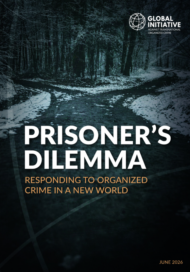
Over the past three decades, the world has constructed a set of norms that provide a comprehensive framework for combating organized crime. There has been a harmonization of national legislation, increased focus on money laundering and other mechanisms of organized crime, and a flourishing of research and understanding about how illicit markets and organized criminal actors work.
In theory, this normative baseline would have been followed by a wave of unified implementation. Organized crime would have been tackled in a strategic, cooperative and systematic way around the world. But it has not worked out like that. Instead, organized crime, illicit markets and the geopolitical environment have changed beyond recognition: we are living in a new world.
Organized crime has also changed beyond recognition – and the response has not kept pace. Drugs and thugs remain present, but elsewhere the world is facing an entirely new order of threat. Today, organized crime is no longer just a concern of the dark street corner – it is woven into every facet of daily lives. Supply chains are corrupted; governance is compromised; legal systems are warped. We carry organized crime in our pockets every day, in the smartphones that act as potential portals to a world of drugs, scams, sex trafficking, weapons and more.
So, what do we do? First, we need to recognize the uniqueness of the moment and the challenge of planning in arguably the most unpredictable situation in living memory. We need to take stock of the current set of approaches to global organized crime, acknowledge the limitations of what we have tried to date and be realistic about what we can achieve in the future. We need to ask the uncomfortable, difficult questions. Is global cooperation on organized crime still possible? Is there a place for short-term militarized responses? Is the criminal justice system adequate for the current situation? How do we measure success?
But we also need to recognize that real impact can only be achieved collectively. Responses to global organized crime face a dilemma today: the temptation to act unilaterally may seem the quickest route to success, but ultimately it will not produce the best overall outcome.
This report identifies six action steps that can help us steer through the cross-currents currently reshaping the world towards a new concept of how to combat organized crime.