Posted on 10 Mar 2026
Illicit gold flows in the Amazon Basin are shifting. Over the past two years, Venezuela has emerged as a regional destination for illicit gold, reversing established smuggling patterns and reshaping supply chains across Brazil and Guyana. This policy brief examines these changes and how intersections with US policy and action may impact illicit gold markets in Venezuela and the wider Western Hemisphere.
Venezuela’s gold sector is structurally criminalised. Over two decades it has evolved into a system linking senior political figures, military officials and transnational organized crime groups, particularly within the Orinoco Mining Arc. Gold mining has provided a financial lifeline to the state amid collapsing oil revenues, while protection arrangements have enabled armed groups and organized criminal actors to consolidate control over mining zones and trafficking corridors.
At the same time, illicit gold mining and trafficking in the Amazon Basin have increasingly been underpinned by organized crime groups, corrupt officials and complex illicit networks, a trend accelerated by record international gold prices. In a significant reversal from previous trafficking patterns, gold from Brazil and Guyana is now flowing into Venezuela. Venezuelan military officials reportedly purchase gold at a premium, drawing traffickers and consolidating control over regional supply chains.
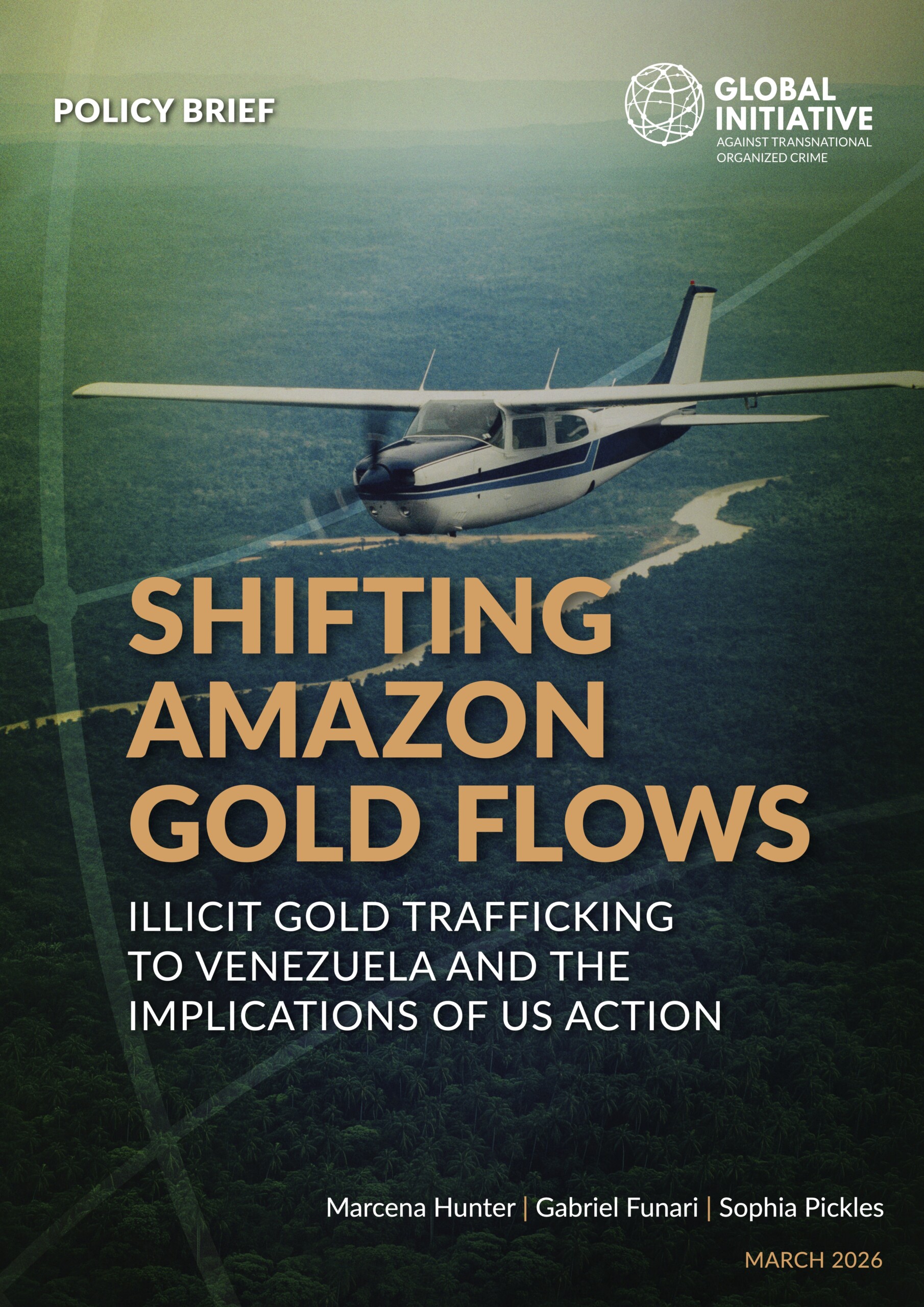
Boa Vista, the capital of Brazil’s Roraima state, has become a central aggregation and logistics hub in these rerouted flows. Gold is transported by road and small aircraft using clandestine airstrips that connect remote mining sites to border crossings and onward routes into Venezuela. Aircraft networks in particular enable rapid adaptation to enforcement pressure, allowing traffickers to shift routes across lightly governed border zones.
Once inside Venezuela, gold is monetised through opaque and often state-linked channels. Brazilian law-enforcement officials report that high-ranking military officials based in the Orinoco Mining Arc purchase the bulk of illicit gold entering from Brazil. Some gold from Guyana is reportedly sold in exchange for Tether (USDT), highlighting the growing role of cryptocurrency in sanction-evasion and gold laundering.
Amid these developments, a bill to combat illicit gold mining is currently making its way through the US Senate. Titled the United States Legal Gold and Mining Partnership Act, the bill proposes a multi-year strategy to disrupt linkages between gold mining and illicit actors, strengthen supply chain due diligence, improve intelligence gathering and address corruption in government institutions. The bill calls for assessments of illicit gold markets, including specific investigation into Venezuela, and introduces measures to strengthen anti-money laundering scrutiny of precious metals–related transactions.
This is a critical juncture. US pressure has introduced strategic uncertainty into Venezuela’s gold economy, but it remains unclear whether this will constrain illicit networks or reconfigure them. Monitoring regional supply chains – particularly flows across Venezuela, Brazil and Guyana, aggregation hubs such as Boa Vista, border crossings and aircraft-based trafficking networks – will be essential. Effective responses must account for shifting dynamics across the Amazon Basin while strengthening due diligence, transparency and intelligence-led approaches to combat illicit gold markets.