Posted on 26 Nov 2026
As ECO-SOLVE reaches the two-year milestone of its four-year mandate—funded by the European Union (EU) under the Global Illicit Flows Programme (GIFP),—this evaluation offers a critical opportunity to reflect on current progress and refine the strategic approach. Launched with the ambitious goal of disrupting the global flow of illicit environmental commodities through data, innovation, community resilience, and international cooperation, the project has successfully transitioned from foundational planning into a highly active, multi-faceted operational mechanism.
Over the past 24 months, ECO-SOLVE has set its holistic strategy into motion across four core outputs:
- Data for Disruption: The Global Monitoring System (GMS) has expanded to ten active data hubs, successfully turning digital footprints into actionable, open-source intelligence for law enforcement.
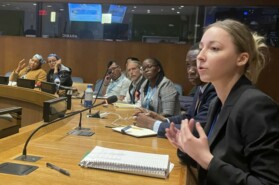
- Multilateral Engagement: A strategic pivot has positioned ECO-SOLVE as a premier convening platform, elevating the issue of environmental crime at major forums like the United Nations Transnational organised Crime (UNTOC) Conference of the Parties (COP) and through the milestone Paris Conference.
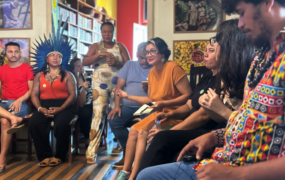
- Community Engagement: Targeted grants are fostering localised resilience and empowering frontline defenders in high-risk biodiversity hotspots.
- Grant Hub (Amplifying Grants): The project is actively working to bridge the global forensic data deficit by piloting cutting-edge AI and DNA technologies in real-world enforcement settings.
This progress has been achieved against a highly complex global landscape characterised by under-resourced law enforcement agencies, shrinking spaces for civil society, and shifting geopolitical priorities. Despite these headwinds, ECO-SOLVE has consistently proven its value as a genuine “force multiplier” —whether by brokering trust between local communities and authorities in Indonesia, providing vital open-source intelligence to overstretched investigators in South Africa, or elevating the voices of grassroots defenders at UN negotiations in Vienna.
Conclusions and Strategic Recommendations
The primary hurdle identified across all components of the evaluation is bridging the gap between short-term, localised interventions and long-term, systemic scale. The project faces a crucial “momentum into impact” challenge: it must ensure that high-level diplomatic resolutions and raw open-source intelligence successfully translate into concrete, law enforcement actions.
To maximise impact in the second half of the project, ECO-SOLVE should implement the following strategic adjustments:
- Scale and Sustain Interventions: To achieve true global scale, short-term catalytic funding must be paired with extended timelines or clear pathways for institutional handover. The project must define scaling objectives for its hyper-localised community grants and provide technologies with the follow-on funding and diplomatic backing required to cross the “academic-operational gap” into standard frontline law enforcement use.
- Align Outputs for Cohesive Impact: Break down operational silos to ensure that all Outputs are capitalising on each other’s strengths. For example, the global policy advocacy (Output 2) is directly fuelled by the on-the-ground intelligence (Output 1) and technological innovations (Output 4) produced across the project. Datahubs (Output 1) could use their LE connections to support first-line defenders (Output 3). Or, Output 2’s connection and advocacy could be used to support regional policy change based on Output 1’s trend data. Many of these potential synergies have already been identified in the theories of change. ECO-SOLVE would benefit from a more structured conversation about how to foster and strengthen these connections.
- Pivot to Strategic Law Enforcement Support: Because environmental law enforcement agencies are chronically under-resourced, simply handing over detection reports is not always sufficient. Data hubs should pivot toward actively helping authorities formulate strategic responses. Simultaneously, the project should consider how to maximise the impact of crime trend data generated by the hubs to influence national and regional policy to create supportive environments for law enforcement action.
- Broaden and Integrate Partnerships: Multilateral advocacy efforts should be expanded beyond civil society to engage bilaterally with “middle-ground” states, African voices, and private sector tech and banking entities. Internally, ECO-SOLVE must combat grantee isolation by establishing formal mechanisms for cross-project communication and increasing the integration and oversight of partner-run data hubs.