Posted on 04 May 2026
The 15th UN Congress on Crime Prevention and Criminal Justice was due to take place in Abu Dhabi in the final week of April 2026, but has been delayed until the end of September due to the conflict in the Middle East. In Vienna, member state delegates instead spent the last week of April attempting to finalize the Congress outcome declaration under Emirati chairmanship, which had set the end of April as the deadline. In line with other recent negotiations under the UNODC umbrella, however, consensus was not reached.
This delay comes at a pivotal moment for the UN Office on Drugs and Crime. UNODC is preparing to welcome its new executive director, Monica Juma, while also grappling with the effects of budget cuts and the wider UN80 reform process. The coming months therefore present a vital window for engagement, as states continue negotiations on the Congress outcome declaration and the UNODC undergoes institutional and leadership change.
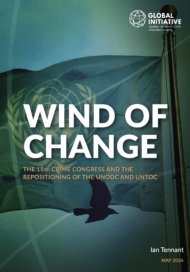
This policy brief, Wind of change: The 15th Crime Congress and the repositioning of the UNODC and UNTOC, puts forward constructive suggestions for taking advantage of this period. It argues that the fight against organized crime should be repositioned within the UN system, that the UN Convention against Transnational Organized Crime should be revitalized as the central legal response, and that UNODC policymaking and programming should be rationalized and strengthened.
The brief examines the number and duplicative nature of conferences, meetings and resolutions under the UNODC umbrella. It shows how the current system is under strain at the same time as resources are being reduced, making it increasingly difficult to implement the agreements that member states adopt. It also charts the growing interest of civil society groups in the issues on the Crime Congress and UNODC agendas, while highlighting the increasing difficulty they face in having their voices heard and contributing community-informed research and analysis.
Central to the recommendations is the need to mainstream civil society voices and perspectives, so that their experience is better leveraged in policymaking negotiations in Vienna and in programming in the field. The brief also proposes ways to build synergies and reduce duplication across the UNODC meeting agenda, supporting both reform and money-saving objectives.
Key recommendations include holding a multi-stakeholder dialogue during the 35th session of the Commission on Crime Prevention and Criminal Justice in Vienna on the content of the Abu Dhabi Declaration, so that civil society views can be aired with member states before the Congress. The brief also recommends rationalizing the current set of conferences and creating a biennial grand conference of the UNODC, bringing together treaty bodies and governing bodies in a more joined-up process.
Further recommendations include avoiding duplicative meetings, including by merging the UNTOC Constructive Dialogues with the standing working groups; supporting a more independent assessment of the growth and threat of organized crime, drawing on external information and analysis; implementing the recommendations of the UN’s transnational organized crime common framework; and rationalizing resolution processes so that resources can be more predictably mobilized to implement agreed commitments.