The African Union’s 39th Ordinary Session, which took place in Ethiopia from 14–15 February, concluded with a resounding assertion that the continent should take unified action in the face of a world order in rupture.
With geopolitical rivalries intensifying, violence and organized crime increasingly instrumentalized, and coercion openly used as a tool of statecraft, the question is no longer whether global power structures will change, but who will shape them. For Africa, this is a decisive moment: a choice between dignity, sovereignty and prosperity, or a deeper descent into insecurity and exploitation.
The sentiment expressed at the African Union meeting echoed the strong stance taken by Canadian Prime Minister Mark Carney at Davos in January, when he challenged the prevailing pessimism by urging middle powers to ‘build a new order’. Insisting that the ‘power of the less powerful begins with honesty’, Carney called for these countries to adjust their strategic approach, pushing back against stronger powers while upholding justice, dignity and shared values.
This is a call that should resonate across the African continent, encouraging nations that have long been sidelined in global decision-making to step forward. For decades, these countries have borne the human cost of unequal globalization – a burden most keenly felt by their young people – amid expanding illicit economies, persistent armed conflicts and increasingly powerful transnational criminal networks. The disintegration of the status quo could empower the people of Africa to shape their own future.
However, at the centre of today’s geopolitical upheaval are predatory global powers intent on exploiting the continent. Africa is rich in strategic resources – coltan and the rare earth minerals critical to emerging technologies and the arms industry; gold, which can be used as a lever against the US dollar; and oil, vital to the world economy – making it both a prize and a battleground. As states race to secure access to these commodities, transnational criminal networks are quick to capitalize on soaring prices and permissive or even supportive environments. The result is a dangerous convergence of competition fuelling corruption, war and oppression, with repercussions felt far beyond Africa’s borders.
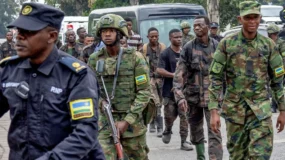
Central Africa provides a stark illustration. In eastern Democratic Republic of Congo, the M23 rebel group has seized large areas of land containing significant deposits of strategic minerals, including gold and coltan. These resources are being funnelled through Rwanda, which presents itself as a regional processing hub while laundering conflict zone minerals into the global supply chain.
Despite repeated peace efforts, it is civilians who continue to pay the highest price. Nearly three decades of conflict, driven by power struggles, resource extraction and criminal networks, have claimed millions of lives and continue to threaten regional escalation. The US-brokered peace agreement of June 2025, designed to secure access to critical minerals and ease tensions between Kinshasa and Kigali, has failed to stop the fighting.
Further north, the war in Sudan has followed a similar pattern. Since April 2023, clashes between the Sudan Armed Forces and the Rapid Support Forces have displaced over 13 million people, triggering one of the world’s largest humanitarian crises. At the heart of the conflict lie Sudan’s gold reserves. Backed by powerful foreign networks, the Rapid Support Forces have established a system of terror that fuels global markets: gold mined in Darfur flows through Dubai to international financial centres, converting local resources into instruments of geopolitical influence and perpetuating cycles of organized mass violence.
In the Central African Republic, Russia’s Wagner Group and its affiliated networks – which are designated by the US administration as a ‘significant transnational criminal organization’ – have become deeply embedded in the country’s political economy. Gold extraction under armed protection has become the backbone of a captured state, met with little resistance from an international community that is increasingly driven by transactional power and resource extraction.
These actions send a stark message: the laws, norms and restraint once exercised by the US and its allies – although applied inconsistently and often in self-interest – have now been completely abandoned. Dictators, rising powers, economic leaders and transnational criminal networks are watching, learning and adapting, and illicit economies are flourishing. If left unchecked, this trend could plunge Africa into an era of unprecedented chaos. For the continent’s people – most of whom are under the age of 25 – the only futures on offer are crime or flight.
African nations are at an inflection point. They can either become further embroiled in a criminalized global system that perpetuates centuries-old patterns of extraction, or they can seize the opportunity to break decisively with that history – asserting collective sovereignty, reclaiming control over their wealth and charting a strategic path toward peace and shared prosperity.
The Non-Aligned Movement, formed in response to the bipolarization of the Cold War, once enabled Global South nations to act collectively in the defence of their sovereignty and security. While the body now holds more symbolic than practical significance, Africa can revive this spirit of unity to defend its strategic interests today. By forming regional coalitions to address security and infrastructure issues, establishing targeted partnerships in specific policy areas such as resources, climate and technology, and forging reciprocal global alliances with middle powers committed to equitable, non-imperial engagement, the continent can safeguard its people and resources and amplify its voice.
The fight against transnational organized crime and illicit economies must be a central pillar within these collaborative efforts. Disrupting such systems is crucial for reducing violence and creating the political and economic conditions necessary for sustainable development.
Africa and its allies have the power to shape a world in which the continent is an architect rather than a bystander – a world in which Africa’s interests are protected and its young people can dream of a future of opportunity and dignity at home. The stakes are high, but so too is the prize.
L’Afrique à la croisée des chemins : Les fractures sur la scène internationale crée un espace propice à une action collective audacieuse sur le continent
La 39e session ordinaire de la conférence de l’Union africaine, qui s’est tenue en Éthiopie les 14 et 15 février, s’est conclue par un message retentissant : le continent africain doit agir unie face à un ordre mondial en rupture.
Avec l’intensification des rivalités géopolitiques, l’instrumentalisation croissante de la violence et du crime organisé, et le recours ouvert à la coercition comme outil de gouvernance, la question n’est plus de savoir si les structures de la gouvernance mondiale vont changer, mais qui les façonnera. Pour l’Afrique, ce moment est décisif : un choix entre la dignité, la souveraineté et la prospérité, ou sombrer davantage dans l’insécurité et l’exploitation.
Le sentiment exprimé lors de la réunion de l’Union africaine fait écho à la position ferme adoptée par le Premier ministre canadien Mark Carney à Davos en janvier. Ce dernier avait remis en question le pessimisme ambiant en exhortant les puissances moyennes à « construire un nouvel ordre ». Insistant sur le fait que « le pouvoir des moins puissants commence par l’honnêteté », M. Carney a appelé ces pays à ajuster leur approche stratégique, en repoussant les puissances plus fortes tout en défendant la justice, la dignité et les valeurs communes.
Cet appel devrait résonner à travers tout le continent africain, encourageant les nations longtemps marginalisées dans les processus décisionnels mondiaux à se manifester. Pendant des décennies, ces pays ont supporté le coût humain d’une mondialisation inéquitable – un fardeau particulièrement lourd pour leurs jeunes – dans un contexte d’expansion des économies illicites, de conflits armés persistants et de réseaux criminels transnationaux de plus en plus puissants. La désintégration du statu quo pourrait permettre aux populations africaines de façonner leur propre avenir.
Cependant, au cœur des bouleversements géopolitiques actuels se trouvent des puissances mondiales prédatrices déterminées à exploiter le continent. L’Afrique est riche en ressources stratégiques – le coltan et les minéraux rares essentiels aux technologies émergentes et à l’industrie de l’armement ; l’or, qui peut être utilisé comme levier contre le dollar américain ; et le pétrole, vital pour l’économie mondiale – ce qui en fait à la fois un enjeu et un champ de bataille. Alors que les États se disputent l’accès à ces matières premières, les réseaux criminels transnationaux s’empressent de tirer profit de la flambée des prix et d’un environnement permissif, voire favorable. Il en résulte une convergence dangereuse où la compétition alimente la corruption, la guerre et l’oppression, avec des répercussions qui s’étendent bien au-delà des frontières africaines.
L’Afrique centrale en est un exemple frappant. Dans l’est de la République démocratique du Congo, le groupe rebelle M23 s’est emparé de vastes territoires riches en minerais stratégiques, notamment en or et en coltan. Ces ressources transitent par le Rwanda, qui se présente comme une plaque tournante régionale pour leur transformation tout en introduisant clandestinement les minerais provenant de zones de conflit dans la chaîne d’approvisionnement mondiale.
Malgré des efforts de paix répétés, les civils continuent de payer le prix fort. Près de trois décennies de conflit, alimenté par des luttes de pouvoir, l’extraction des ressources et les réseaux criminels, ont fait des millions de victimes et continuent de faire planer la menace d’une escalade régionale. L’accord de paix négocié par les États-Unis en juin 2025, destiné à garantir l’accès aux minéraux essentiels et à apaiser les tensions entre Kinshasa et Kigali, n’a pas réussi à mettre fin aux combats.
Plus au nord, la guerre au Soudan a suivi un schéma similaire. Depuis avril 2023, les affrontements entre les forces armées soudanaises et les Forces de soutien rapide ont déplacé plus de 13 millions de personnes, déclenchant l’une des plus graves crises humanitaires au monde. Au cœur du conflit se trouvent les réserves d’or du Soudan. Soutenues par de puissants réseaux étrangers, les Forces de soutien rapide ont mis en place un système de terreur qui alimente les marchés mondiaux : l’or extrait au Darfour transite par Dubaï vers les centres financiers internationaux, transformant les ressources locales en instruments d’influence géopolitique et perpétuant les cycles de violence organisée.
En République centrafricaine, le groupe russe Wagner et ses réseaux affiliés – désignés par l’administration américaine comme une « organisation criminelle transnationale importante » – se sont profondément implantés dans l’économie politique du pays. L’extraction d’or sous protection armée est devenue le pilier d’un État capturé, sans rencontrer beaucoup de résistance de la part d’une communauté internationale de plus en plus guidée par les rapports de force transactionnels et l’extraction des ressources.
Ces actions envoient un message clair : les lois, les normes et les restrictions autrefois appliquées par les États-Unis et leurs alliés – bien que de manière incohérente et souvent dans leur propre intérêt – ont désormais été complètement abandonnées. Les dictateurs, les puissances émergentes, les leaders économiques et les réseaux criminels transnationaux observent, apprennent et s’adaptent, et les économies illicites prospèrent. Si rien n’est fait, cette tendance pourrait plonger l’Afrique dans une période de chaos sans précédent. Pour les habitants du continent, dont la plupart ont moins de 25 ans, les seules perspectives d’avenir sont le crime ou la fuite.
Les nations africaines se trouvent à un tournant. Elles peuvent soit s’enfoncer davantage dans un système mondial criminalisé qui perpétue des schémas d’exploitation vieux de plusieurs siècles, soit saisir l’occasion de rompre avec cette histoire, en affirmant leur souveraineté collective, en reprenant le contrôle de leurs richesses et en traçant une voie stratégique vers la paix et la prospérité partagée.
Le Mouvement des pays non alignés, formé en réponse à la bipolarisation de la guerre froide, a autrefois permis aux pays du Sud d’agir collectivement pour défendre leur souveraineté et leur sécurité. Bien que cet organisme ait aujourd’hui une importance plus symbolique que pratique, l’Afrique peut raviver cet esprit d’unité pour défendre ses intérêts stratégiques actuels. En formant des coalitions régionales pour traiter les questions de sécurité et d’infrastructures, en établissant des partenariats ciblés dans des domaines politiques spécifiques tels que les ressources, le climat et la technologie, et en forgeant des alliances mondiales réciproques avec des puissances moyennes engagées dans un engagement équitable et non impérialiste, le continent peut protéger ses populations et ses ressources et amplifier sa voix.
La lutte contre la criminalité transnationale organisée et les économies illicites doit être un pilier central de ces efforts. Il est essentiel de combattre ces systèmes de la violence et créer les conditions politiques et économiques nécessaires au développement durable.
L’Afrique et ses alliés ont le pouvoir de façonner un monde dans lequel le continent est un acteur plutôt qu’un spectateur, un monde dans lequel les intérêts de l’Afrique sont protégés et où sa jeunesse peut enfin rêver d’un avenir plein d’opportunités et de dignité. Les enjeux sont importants, mais les gains potentiels le sont tout autant.