Posted on 15 Jan 2026
The Colombia–Oman resolution, an important step towards achieving a global consensus on the responsible management of the planet’s minerals and metals, was passed at the seventh UN Environment Assembly (UNEA) in Nairobi, Kenya, in December. The resolution focuses on the environmentally sound management of minerals and metals.
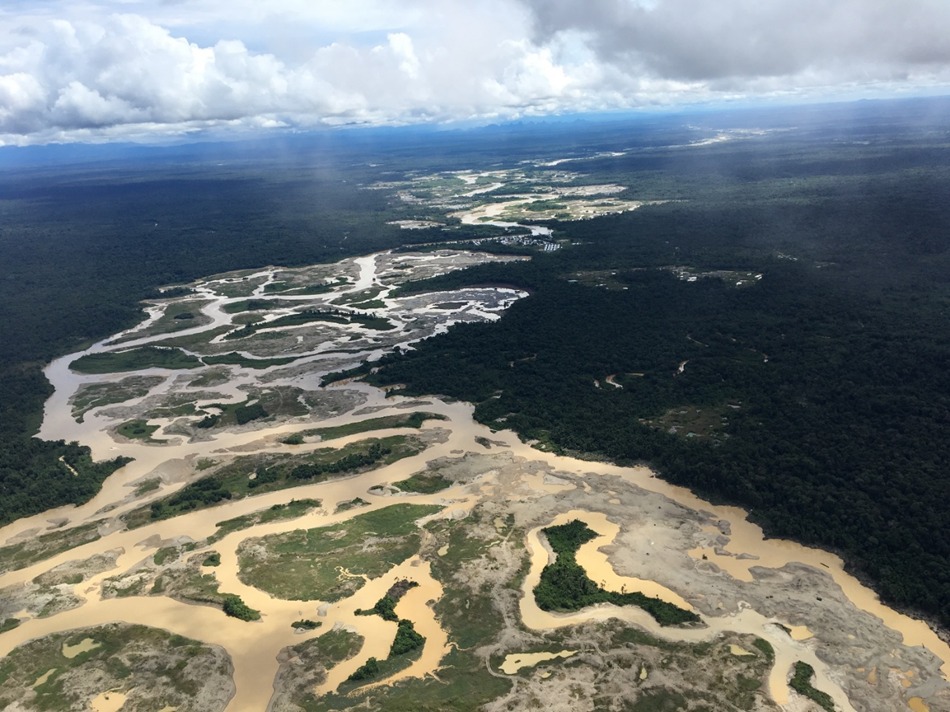
The initiative – championed by the Colombian government and co-sponsored by Oman – began as an attempt to curb the disastrous environmental impact of illegal mining in the Amazon. But its scope was later expanded to encompass the broader goal of improving the global management of mineral and metal extraction and trade. Left unchecked, the growing exploitation of minerals and metals poses economic risks, intensifies social vulnerability and threatens state stability.
At a time of skyrocketing demand for metals, intensifying geopolitical tensions over the control of natural resources and widespread US withdrawal from global institutions, the need for collective action to ensure environmentally and socially responsible resource management is greater than ever. In this context, any progress towards international coordination on environmental protection becomes both more challenging and more valuable.
Escalating illegal exploitation of resources shows how critical these efforts are. Criminal actors have become increasingly embedded in these economies and their supply chains. The GI-TOC’s 2025 Organized Crime Index maps significant criminal foreign involvement in the illegal mining of minerals in South East Asia, convergence between cocaine trafficking and illegal mining in the Amazon, the criminal presence of Chinese actors in informal mining in West Africa, and the looting, extortion and smuggling of resources by private military company the Wagner Group – rebranded as Africa Corps – to name just a few examples. As world gold prices have risen, GI-TOC research has revealed a corresponding surge in criminal activity in gold mining and trade, which all too often comes at a huge environmental cost. In mining and metal processing, criminality and environmental damage frequently go hand in hand.
Colombia’s draft proposal called for internationally binding rules to be applied to the entire mineral supply chain in order to minimize environmental damage and safeguard the rights of Indigenous peoples and other impacted communities. It also advocated for supply chain due diligence, a global best practice whereby companies identify environmental threats and governance risks, and safeguard human rights in their supply chains. In collaboration with Oman, Colombia took the step to combine that country’s draft resolution on mining tailings with its own proposal, and further addressed the risks associated with tailings dams and other mining waste operations, which have caused catastrophic disasters and claimed hundreds of lives in recent decades.
Although the final resolution, passed on 12 December, is an important milestone, it falls far short of what could have been a much stronger and more ambitious outcome. During two weeks of intense negotiations, Saudi Arabia and Iran, among other countries, strongly opposed sections of the proposal. Their arguments were that they could not understand its full intentions or purpose, and they objected to the creation of another body or platform.
Furthermore, important environmental and supply chain due diligence commitments were dropped in the final hours of negotiations, following opposition from Uganda, Russia and others. Environmental and supply chain due diligence imposes on companies the need to include controls and responses around environmental harm, human rights and anti-corruption in their business operations and along their supply chains – from metal traders and exchanges to retailers, international concentrate traders, smelters and refiners. Here, Uganda’s opposition is particularly questionable, given that it is a signatory to due diligence commitments on minerals and metals through a cross-regional programme of the International Conference on the Great Lakes Region.
Nevertheless, this resolution is a much-needed first step. By bringing together national focal points and other stakeholders to discuss the sustainable management of minerals and metals, it can enhance cooperation in the environmental management of these resources. It is important that the resolution ushers in a much broader and more ambitious global effort, one that addresses environmental crime in all its forms.
Member states cannot afford to lose sight of the fact that the longer environmental degradation and crime remain unaddressed, the greater the economic risk and social vulnerability to people and nature, and the greater the threat to state stability. Failing to tackle environmental crime globally buys organized criminal groups time to exploit the ecosystems and natural resources on which our lives depend.