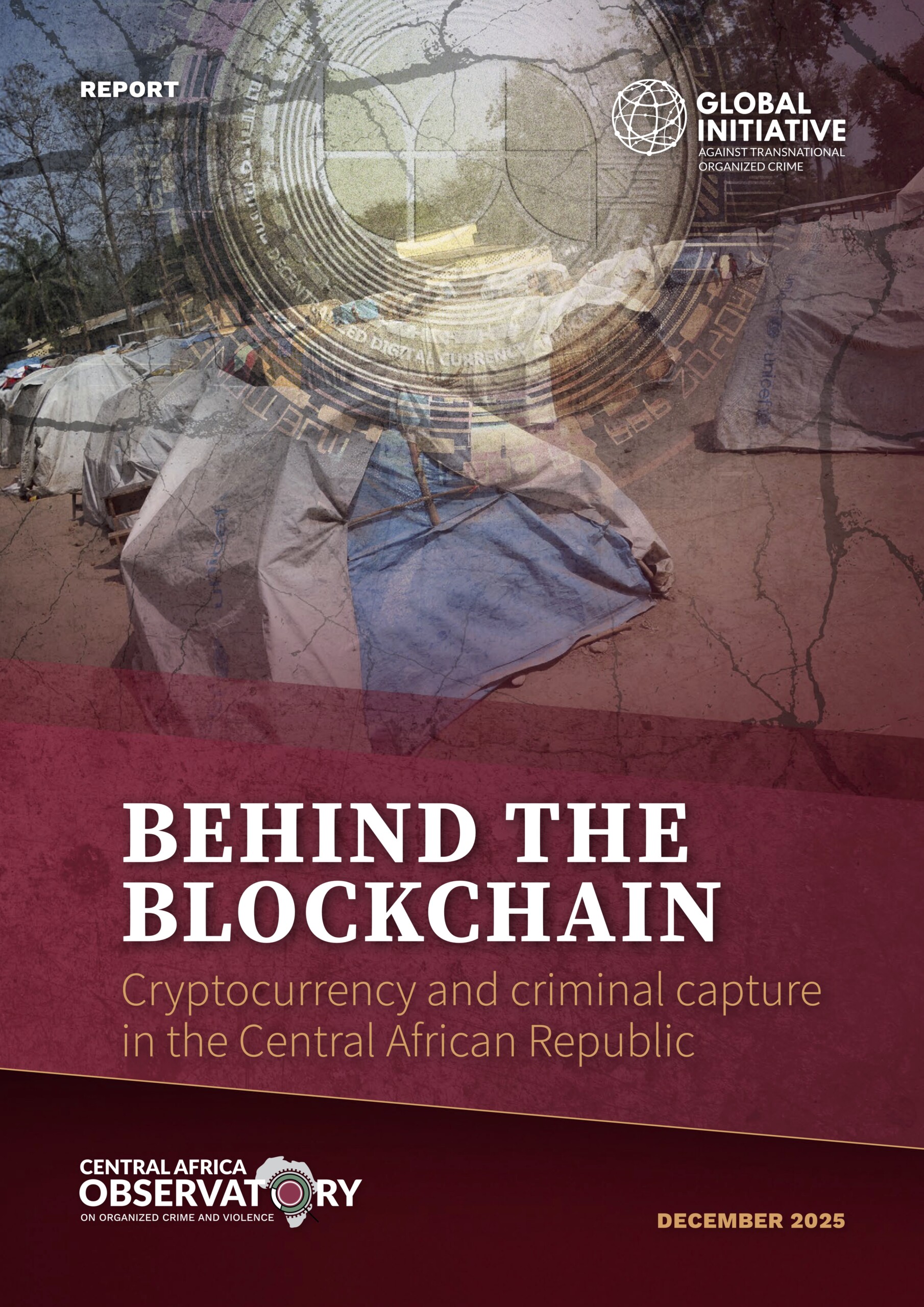
Over the past three years, the Central African Republic (CAR) has implemented a series of cryptocurrency initiatives that have unfolded amid extreme political instability, armed violence and shrinking civic space. These initiatives, launched under President Faustin-Archange Touadéra, were presented by the government as tools for economic growth, modernization and national development. However, the evidence documented in this report raises serious concerns about how cryptocurrency has been deployed, by whom, and to whose benefit.
Since 2022, the CAR has pursued an ambitious crypto agenda that included making bitcoin legal tender, launching a national cryptocurrency (Sango Coin), and later introducing a meme-based token known as $CAR. These initiatives were rolled out in a country where access to electricity, mobile connectivity and the internet remains severely limited, and where much of the population is affected by displacement, insecurity and poverty. As a result, meaningful participation by citizens in cryptocurrency markets has been largely unrealistic.
This report traces how these cryptocurrency ventures were introduced in parallel with broader political developments, including the consolidation of executive power, the growing influence of foreign actors, and the monetization of natural resources. The CAR became the second country in the world to legalize cryptocurrency as official tender, a move that was swiftly criticized by international financial institutions, regional banking regulators and the country’s own Constitutional Court. While the law was later amended to revoke bitcoin’s status as legal tender, subsequent legislation enabled the tokenization of land and natural resources through blockchain-based systems that lacked robust governance safeguards.
Sango Coin, launched in mid-2022, was marketed as a transformative economic project. It offered foreign investors access to land, e-residency and investment opportunities in mining and forestry, and promised large-scale infrastructure projects such as a ‘Crypto City’. Despite these ambitions, the initiative failed to attract significant investment, with only a small fraction of the intended tokens sold, and many of its promised outcomes remaining unrealized.
In early 2025, the government introduced a second initiative: the $CAR meme coin. Launched with heavy promotion on social media, the token experienced extreme volatility and was marked by technical irregularities, opaque governance and questions about market manipulation. The report documents how the $CAR coin was linked to speculative land tokenization, allowing plots of land to be purchased using cryptocurrency through largely unregulated platforms.
Drawing on open-source research, blockchain analysis and publicly available data, the report examines how these cryptocurrency initiatives created opportunities for opaque financial flows, speculative practices and potential criminal exploitation. It highlights the role of shadow networks, foreign private actors and individuals with histories of fraud allegations in shaping and promoting the CAR’s crypto agenda.
Against a backdrop of weak institutions and limited oversight, the report concludes that cryptocurrency in the CAR has functioned less as a tool for inclusive development and more as a mechanism that favours elite interests while exposing the country to heightened risks of financial abuse, loss of sovereignty and criminal capture.
Derrière la blockchain: Cryptomonnaie et emprise criminelle en République centrafricaine
Au cours des trois dernières années, la République centrafricaine (RCA), un État fragilisé par une instabilité chronique, la criminalité transnationale organisée et l’ingérence de puissances étrangères, a lancé une série d’initiatives liées aux cryptomonnaies qui font peser de sérieux risques sur l’avenir économique du pays et créent un environnement propice à l’infiltration et à la captation de l’économie nationale par des réseaux criminels internationaux.
Lancé en pleine guerre menée par des mercenaires russes et les forces armées nationales contre des populations civiles considérées comme affiliées à des groupes rebelles, le gouvernement de la RCA a affirmé que son programme de cryptomonnaie était conçu pour le bien du peuple et qu’il stimulerait la croissance économique et le développement des infrastructures dans tout le pays. Une telle affirmation apparaît toutefois peu crédible. Une population largement appauvrie, confrontée à des violences extrêmes — exécutions sommaires, torture et violences sexuelles — et disposant d’un accès très limité à l’électricité, aux télécommunications mobiles et à Internet, ne saurait participer de manière significative à des investissements en cryptomonnaies. Au contraire, le programme de cryptomonnaie initié par le gouvernement centrafricain semble davantage répondre aux intérêts d’investisseurs étrangers qu’aux besoins fondamentaux de sa population.
Les cryptomonnaies sont reconnues comme des instruments exploités par des réseaux criminels transnationaux, notamment pour le blanchiment de capitaux, le trafic de stupéfiants, les fraudes financières, les attaques par rançongiciel, le contournement des régimes de sanctions internationales et le financement du terrorisme. Or, les initiatives de la RCA en matière de cryptomonnaies ne sont pas assorties de la réglementation et de la surveillance nécessaires pour protéger le système contre ces flux financiers illicites. Les deux principales initiatives de la RCA dans ce domaine, d’abord le Sango Coin, puis le memecoin $CAR, ont été lancées à la hâte et semblent avoir donné de mauvais résultats.
Les politiques adoptées par le pays en matière de cryptomonnaies — notamment la décision d’accorder à celles-ci le statut de monnaie légale — ont suscité de vives critiques de la part des institutions financières internationales, des régulateurs bancaires régionaux ainsi que de la Cour constitutionnelle du pays. Plus particulièrement, la loi de juillet 2023 facilitant la tokenisation des ressources nationales — en permettant à des jetons numériques émis sur une blockchain de représenter des droits de propriété, d’usage ou des flux de revenus liés au pétrole, à l’or, au bois ou fonciers — est entachée de graves lacunes en matière de gouvernance et fait peser des risques significatifs sur la souveraineté du pays. Enfin, l’implication, dans l’élaboration du programme de cryptomonnaie national, de ressortissants étrangers ayant fait l’objet d’accusations ou étant impliqués dans des fraudes et d’autres activités criminelles ne fait que fragiliser davantage la crédibilité déjà contestée de cette initiative.
En fin de compte, les initiatives de la RCA en matière de cryptomonnaie – conçues de manière incohérente, mal exécutées et remplies de signaux d’alerte – favorisent en réalité les intérêts des élites, voire des acteurs criminels, au détriment de la population dans son ensemble. Plutôt que d’être un instrument d’innovation monétaire, elles constituent un moyen supplémentaire d’exercer une emprise et d’exploiter le pays afin que ceux qui détiennent le pouvoir puissent conserver leur statut.
Ces dernières années, l’espace réservé à la recherche indépendante et à la société civile en RCA s’est considérablement réduit. L’accès à l’information est devenu de plus en plus limité. Un climat de peur règne parmi ceux qui détiennent des informations sensibles, si bien que très peu d’entre eux sont prêts à s’exprimer par crainte de représailles. Pour ces raisons, le présent document s’appuie sur des informations et des données accessibles au public obtenues grâce à des techniques de recherche en source ouverte. Il est le fruit de trois approches de recherche complémentaires : une analyse documentaire approfondie, une enquête en source ouverte et une analyse des cryptomonnaies.