Posted on 11 Dec 2025
Human trafficking is accelerating. Protection systems are overstretched, front line responders under-resourced, and digital technologies are enabling forms of abuse that evolve faster than states can regulate or detect. Against this backdrop, states gathered at the United Nations in New York in November, acknowledging a shared reality: today’s global crises are creating conditions in which exploitation is flourishing, and any impactful anti-trafficking response must place survivors at the centre.
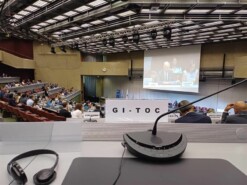
On 24–25 November, the High-level Meeting of the UN General Assembly assessed the Global Plan of Action to Combat Trafficking in Persons. The opening remarks set the tone for two days of sobering reflection grounded in evidence.
Annalena Baerbock, president of the UN General Assembly, condemned the scale and cruelty of trafficking, noting that cases continue to rise globally. Women and girls are disproportionately affected, comprising 61 per cent of all victims identified, most of whom are subjected to sexual exploitation. Children also remain highly vulnerable, accounting for nearly one in three victims worldwide. In some regions, particularly sub-Saharan Africa and South Asia, they represent over 50 per cent of all detected cases.
Baerbock also highlighted the increase in forced labour, which now accounts for 42 per cent of all reported trafficking cases worldwide. She warned that victim identification rates remain critically low, reflecting a persistent weakness in the global response.
Another concern is the rise in trafficking for forced criminality, including recruitment into cyber-fraud and scam operations. The UN Special Rapporteur, Siobhán Mullally, drew attention to this trend, pointing to a striking contradiction: while billions are being invested in artificial intelligence, almost no resources are allocated to preventing human trafficking. She stressed that technology must be used proactively to disrupt cyber-enabled exploitation and to protect people before harm takes root.
Survivors emerged as one of the meeting’s defining elements. Throughout the event, survivors grounded debates in their personal experiences and presented the initiatives they are spearheading, such as the African Survivor Coalition, Footprint to Freedom, The Love Storm and the Human Thread Foundation. These initiatives are paving the way for enhanced protection and community mobilization.
However, visibility alone is not enough. Despite their increasing presence at multilateral events, survivors are all too often peripheral to the design and implementation of anti-trafficking responses. Their insights should not merely supplement policy; they should inform the systems designed to protect them.
These discussions closely align with the GI-TOC’s long-standing analysis. According to the latest Global Organized Crime Index, human trafficking continues to be the second most prevalent criminal market worldwide, increasing from 5.82 in 2023 to 5.92 in 2025. Only financial crimes score higher, with a score of 6.21. Human smuggling has followed a similar trajectory, increasing from 5.16 to 5.25, and establishing itself as the third-strongest criminal market globally.
A closer reading of these scores reveals two patterns. First, the scale of exploitation is growing, even at a time when several other criminal markets remained stable or declined. Second, the parallel increases in trafficking and smuggling suggest the proximity of these two criminal markets, as well as how they interact, with people on the move often facing overlapping vulnerabilities that can deteriorate from smuggling into trafficking.
These trends reinforce the need for urgent policy responses that address trafficking as part of a broader ecosystem of exploitation intersecting with corruption, cyber-enabled crime and other criminal markets, such as drug trafficking and the exploitation of the extractives sector.
The GI-TOC has warned that technology is accelerating trafficking dynamics by lowering the barriers to recruitment, coercion and control. One of the most alarming manifestations of this is the rapid expansion of forced criminality within cyber-scam compounds in South East Asia. These industrial-scale operations rely on sophisticated social engineering techniques and are staffed by people who have been lured, coerced or trafficked from over 70 countries.
However, there is still a significant lack of systematic, intersectional, disaggregated data, particularly with regard to gender, age, disability and other inclusion markers. Without this information, the scale and nature of exploitation remain obscured, thereby limiting the effectiveness of state-led and multilateral responses.
As the gaps in prevention, protection and technology use become more apparent, it is clear that states cannot address trafficking alone. Civil society plays an indispensable role in monitoring accountability, detecting emerging trends and ensuring that responses are survivor-centred.
NGOs also act as trusted intermediaries between vulnerable communities and the authorities, bridging communication gaps, building trust and encouraging reporting that might otherwise never occur. Through independent research and survivor-led advocacy, NGOs support policy development, making them essential partners in prevention efforts and in shaping approaches that prioritize long-term protection over purely punitive measures.
Civil society also promotes the use of technology for prevention and disruption. Through cross-sector collaboration, NGOs help to develop tools and standards that strengthen anti-trafficking responses, such as Tech Against Trafficking’s Landscape mapping of anti-trafficking tech tools.
A new phase of state commitments
As a result of the meeting, member states adopted by consensus the 2025 Political Declaration on the Implementation of the United Nations Global Plan of Action to Combat Trafficking in Persons. The declaration strengthens the global framework by:
- Integrating survivor expertise across all stages of policy and programming.
- Calling for stronger, better-resourced and more coordinated protection systems capable of responding to fast-evolving threats, including online recruitment, AI-enabled grooming and forced criminality linked to cyber-fraud operations.
- Urging governments to close the justice gap through enhanced cross-border cooperation, legislation, improved data collection and measures addressing structural drivers such as conflict, inequality, displacement and unsafe migration.
The 2025 declaration represents a notable evolution from previous commitments. States have now acknowledged that traditional approaches are no longer sufficient, and that responses must adapt to the rapidly changing technological and criminal landscapes. The declaration also places greater emphasis on prevention and calls for meaningful engagement from private technology companies – an important step, given their absence from the meeting.
However, renewed commitments on paper will not shift the current trajectory unless states confront trafficking as embedded in other criminal economies and adapt their responses to a constantly evolving criminal market. The question is whether states can act faster than the criminal networks they seek to dismantle.